
Using connectors
Current releases and activation
Server/CLI beta51 + SDK/runner 0.1.12 publish 114 official connectors plus Custom MCP. App beta22 remains public; its dated GUI proof is App22/server45, not server51. The seven common defaults are ClickUp, GitHub, Notion, Outlook Mail/Calendar, OneDrive and Slack. See configuration and explicit opt-ins. Each connection still needs local authorization and provider consent. Shopify is a restricted two-host QA opt-in with qualified canonical privacy coverage. Four real reads, renewal/convergence and controlled lost-mail restart/recovery passed. Synthetic privacy delivery/dedup/export ACK and owned runtime/profile/worker cleanup passed. The existing approved app now routes its webhooks centrally; a genuine QA uninstall reached the broker and legacy receiver. It exposed a beta50 native polling error. Beta51 corrected it and processed the same queued event on both preserved profiles, retaining one identical durable receipt after real restarts. Those profiles were already disconnected, so this does not establish event-caused credential erasure. General Shopify admission stays paused, and real-customer erasure is unqualified. Google stays explicit opt-in: Branding is verified, but data access is in review and unverified; approval and the required security assessment are incomplete. Jira passed all nine tools, renewal, same-profile restart and disconnect in a private app-owner QA trial. Public distribution additionally requires implemented personal-data reporting; the provider declaration has not been confirmed. SharePoint needs an eligible work/school-account trial; Postiz has a cloud-plan prerequisite and its API acceptance remains unqualified. Neither is a default. See dated release, installer and provider evidence for exact limits. Older installations retain their pins until explicitly updated.
OpenAgent provides one shared connector implementation for the standalone server and independent host products that embed it. Your product server stores encrypted credentials and makes normal API calls directly to the provider. Accounts, agent history, files and customer databases remain with that product.
Server51 retains the seven defaults: clickup, github, notion, outlook_mail, outlook_calendar, onedrive and slack_import only when both operator settings are absent. Explicit provider lists replace that default rather than extending it. The full eleven-ID example retains those seven and adds Google's four profiles for an explicitly authorized limited trial; it does not imply Google verification. Historical servers43–45 defaulted to three profiles, beta46 to six, while beta40 required opt-in. An explicit empty list or empty environment value remains an opt-out; listing a provider creates no connection, broker registration or grant. Every OAuth connection still requires local authorization and the provider's consent. See the configuration precedence. Shopify is non-default: beta51 requires explicit opt-in, actual canonical privacy coverage and the authenticated receipt-v2 contract before host enrollment, while broker QA admission, bounded lifecycle/synthetic privacy QA and genuine provider callback/cutover acceptance are separate boundaries. Historical content and unsupported host surfaces are not automatically qualified. Existing tokens retain their original OAuth registration. The legacy ClickUp callback has been removed by the operator; a new ClickUp consent must use the shared app callback.
Token connectors and Microsoft files
SDK 0.1.12 and server/CLI51 publish 114 official integrations plus Custom MCP. The 90 token connectors provide two specific reads each: for example, Coda profile/document details, Postman collection list/details, and Cloudflare zones/accounts. See the provider API profiles and the versioned catalog for each connector's operations and setup guidance.
Use a dedicated API/access token authorized for those reads. The receiving server encrypts it locally; the provider checks its real permissions. These connections do not fabricate OAuth grants or promise automatic token renewal. Documented response fixtures and installed tests qualify the implementation; no real-account acceptance is claimed for all 90 providers. Public App22 adds the shared setup guidance and 45 shared provider marks. Its actual Linux x64 GUI trial verified the cards, marks and blank Postman token form without entering a token or calling a provider.
OneDrive has five read tools for existing drives, file metadata, folder items and bounded file contents. SharePoint has seven, adding site search/details and site-bound document libraries. There are no file writes or automatic OneDrive provisioning. Each Microsoft account has a separate OAuth connection. After an operator configures a valid OAuth app and the account authorizes it, select the site first for SharePoint, then select its document library; for OneDrive, select an existing drive. Only a fresh authorized resource-list result can set the binding. Model arguments cannot choose another site, drive or download URL.
OneDrive requests delegated Files.Read with identity/renewal scopes; SharePoint requests explicit Sites.Read.All, which is broader than access to one selected site. The local selection narrows tool use; it does not narrow the provider's consent. Sites.Selected is not silently replaced by a broader grant. OneDrive's bounded drives.list OAuth/read/refresh/restart/disconnect lifecycle passed on server45; file-content reads remain unqualified. SharePoint's eligible work/school-account consent/site-data trial is pending. The CLI uses the same owner-authorized server resource selection:
openagent-cli connectors microsoft-resources <connection-id> --kind drives --json
openagent-cli connectors select-microsoft-drive <connection-id> <drive-id>
# SharePoint: search and select a site before listing its drives.
openagent-cli connectors microsoft-resources <connection-id> --kind sites --query Research --json
openagent-cli connectors select-microsoft-site <connection-id> <site-id> --query Research
Use the same --page-token when selecting a resource from a later page. After selection, list again from page one: resource tokens are bound to the connection, account, credential generation and current selection.
Historical Calendar and mail SDK introduction
SDK 0.1.7 is public with 22 official connectors plus Custom MCP, including Google Calendar (7 tools), Outlook Mail (9) and Outlook Calendar (7). The SDK receipt qualifies code, packages and isolated protocol fixtures. At the SDK17/server44 release, real Google/Microsoft acceptance was pending and common enrollment was closed. The later dated server45 trials in status establish only their specific account/operation scope. Server/CLI44 is public with 22 entries and installed Python qualification. The fresh public installer44 passed combined server/CLI installation, dependency/version checks and the installed 22-plus-Custom catalog, with no source overlay or HOME/TMPDIR override and no server/model start or provider call. App21 is public with six native targets and 36 verified assets; App21/server44 Linux x64 marketplace passed. These versioned historical receipts remain below the current App22/server45 screenshots.
After a receiving host adopts and qualifies SDK17 and an operator configures an approved OAuth app, each account uses a separate connection through the same marketplace/API/CLI controls. Read access, local permission to change data and provider scopes remain independent. Outlook sending additionally requires Mail.Send; preparing a draft does not send it. See Calendar/mail setup and recovery for scopes, account binding and the bounded first-release operations.
Shared components
The architecture guide explains which parts are shared and which stay in the receiving product. Operators can use the setup and recovery guide.
Connector library
For the expanding typed API subset, token setup and its qualification boundary, see shared provider API profiles.
The ChatGPT app coverage guide preserves the complete observed directory and its editorial Popular order. Published SDK 0.1.12 contains 114 implemented official adapters plus Custom MCP, consumed by server/CLI51. Library publication is separate from provider activation and each receiving host's rollout. See the SDK read receipt, normal product lifecycle and App 20 GUI receipt for their exact limits. These do not establish full ChatGPT feature parity.
| Connector | Authentication | Shared implementation |
|---|---|---|
| OneDrive | OAuth | Existing drives, folder items, file metadata and bounded file contents; 5 read tools; explicit drive selection |
| SharePoint | OAuth | Authorized site search/details, site-bound document libraries and bounded file reads; 7 read tools |
| Google Calendar | OAuth | CalendarList and events; 7 tools with local write admission and version checks |
| Outlook Mail | OAuth | Folders, messages, attachments and drafts; sending requires separate permission; 9 tools |
| Outlook Calendar | OAuth | Calendars and events; 7 tools with finite UTC writes and version checks |
| 90 provider API profiles | Dedicated API/access token | Two concrete reads per provider, with setup guidance and provider-enforced permissions |
| Shopify | OAuth | Products, orders, inventory and permitted store operations |
| Gmail | OAuth | Messages, threads, attachments, drafts and sending |
| Google Drive | OAuth | Search, files, folders and permitted file operations |
| Google Analytics | OAuth | Read-only GA4 reports and metadata |
| ClickUp | OAuth | Tasks, workspaces, Docs, Goals and time tracking |
| Postiz | OAuth | Social integrations, analytics, drafts and publishing; credential rotated and broker configured on 19 October; not a default; first beta47 poll failed HTTP503; broker correction and fresh OAuth connection passed; one read workflow failed; API acceptance unqualified |
| Pipeboard Ads | API token | Meta/Google Ads reports and permitted campaign pause |
| Replio | Organization API token | Apps, conversations and support statistics |
| BillingBear | Project API token | Revenue and customer billing information |
| IMAP Email | Local account/app passwords | Read messages and send through SMTP over TLS |
| GitHub | GitHub App OAuth | Selected repositories, code and pull-request reads, issues/comments; 17 operations |
| Notion | Public OAuth with selected pages | Search, pages, blocks and profiles; 8 operations |
| Slack | Confidential user OAuth | Conversations/history, profiles and text post/update/delete; 9 operations |
| Atlassian / Jira | Resource-level OAuth and verified site selection | Projects, JQL search, issues and comments; 9 operations; private app-owner OAuth/API trial passed; public sharing awaits personal-data reporting |
| Exa | Keyless, no account or API key | Public search/fetch; 2 read tools; limited product fetch lifecycle on beta 41 |
| Firecrawl | Keyless, no account or API key | Public search/Markdown scrape; 2 read tools; limited product scrape lifecycle on beta 41 |
| Parallel Search | Keyless, no account or API key | Public search/excerpt fetch; 2 read tools; fetch workflow/restart/disconnect on beta 43 |
| Context7 | Keyless, no account or API key | Resolve library IDs and query public docs; 2 read tools; query workflow/restart/disconnect on beta 43 |
| CoinGecko | Keyless, no account or API key | Bounded public prices/global aggregates; 2 read tools; global workflow/restart/disconnect on beta 43 |
Custom MCP servers remain available alongside official connectors. Embedding products retain their own controls over who may install connectors, which agents may use them, and whether they may make changes.
Connect and disconnect
In the App connected to an updated server, or a receiving product with the shared catalog enabled:
- Select the receiving server and authenticated user first. In the App, open Connectors → Browse; the same search/grid contains provider integrations and registry MCPs, with no dedicated official category.
- Select Install on the provider card. Unavailable cards explain the current reason. Registry MCPs keep their normal install/configuration path; review the chosen endpoint or package.
- For OAuth, inspect the receiving installation and requested permissions in the consent flow, then complete the provider's consent. Your server retrieves the result through outgoing requests.
- For token/account authentication, enter the dedicated API key or account/app password on the receiving server's setup screen. Never put it in a chat. With published server beta 43 and App beta 20, the five keyless providers use the same card's Install → Connect flow without a token prompt or OAuth page.
- Open Manage on the connected card to enable/disable tools, authorize changes where the integration supports them, reconnect or disconnect locally.
Read/write controls govern product tool admission. Provider OAuth scopes may be broader; a local read-only choice does not rewrite the provider's grant. A token connection being saved as Connected does not prove a successful provider API call; verify access with an appropriate authorized operation.
Historical App22/server45 marketplace — 18 October 2026
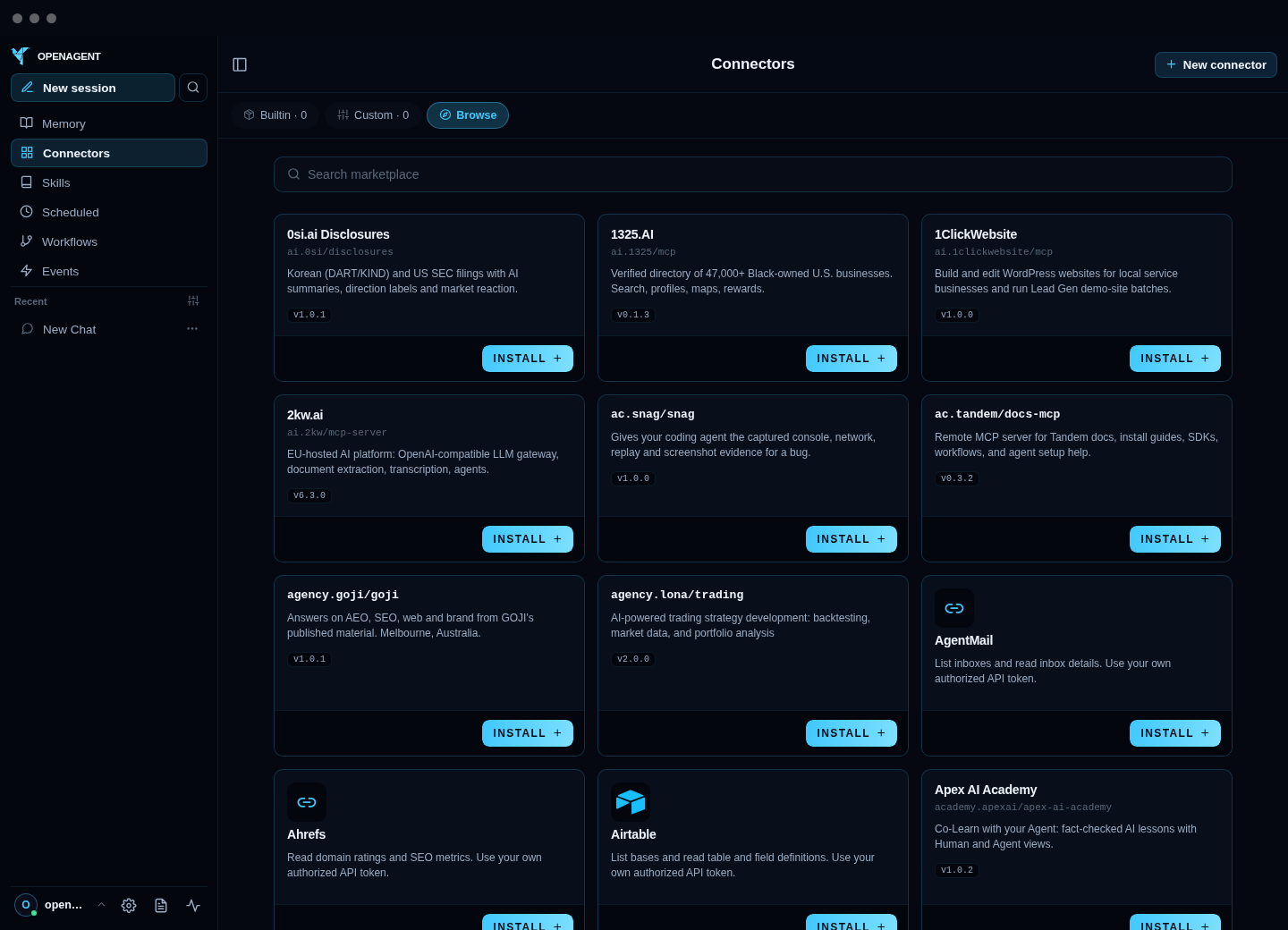
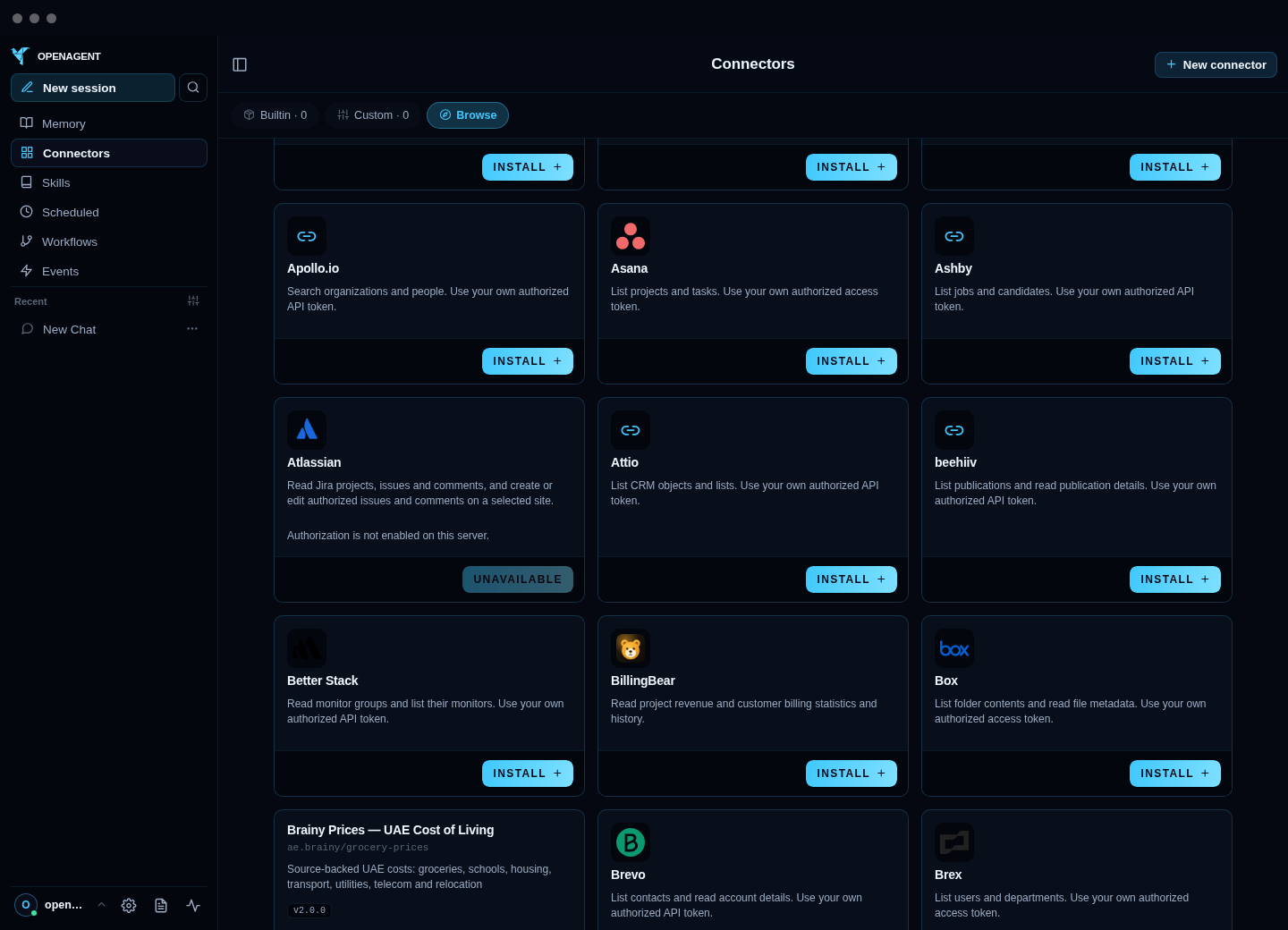
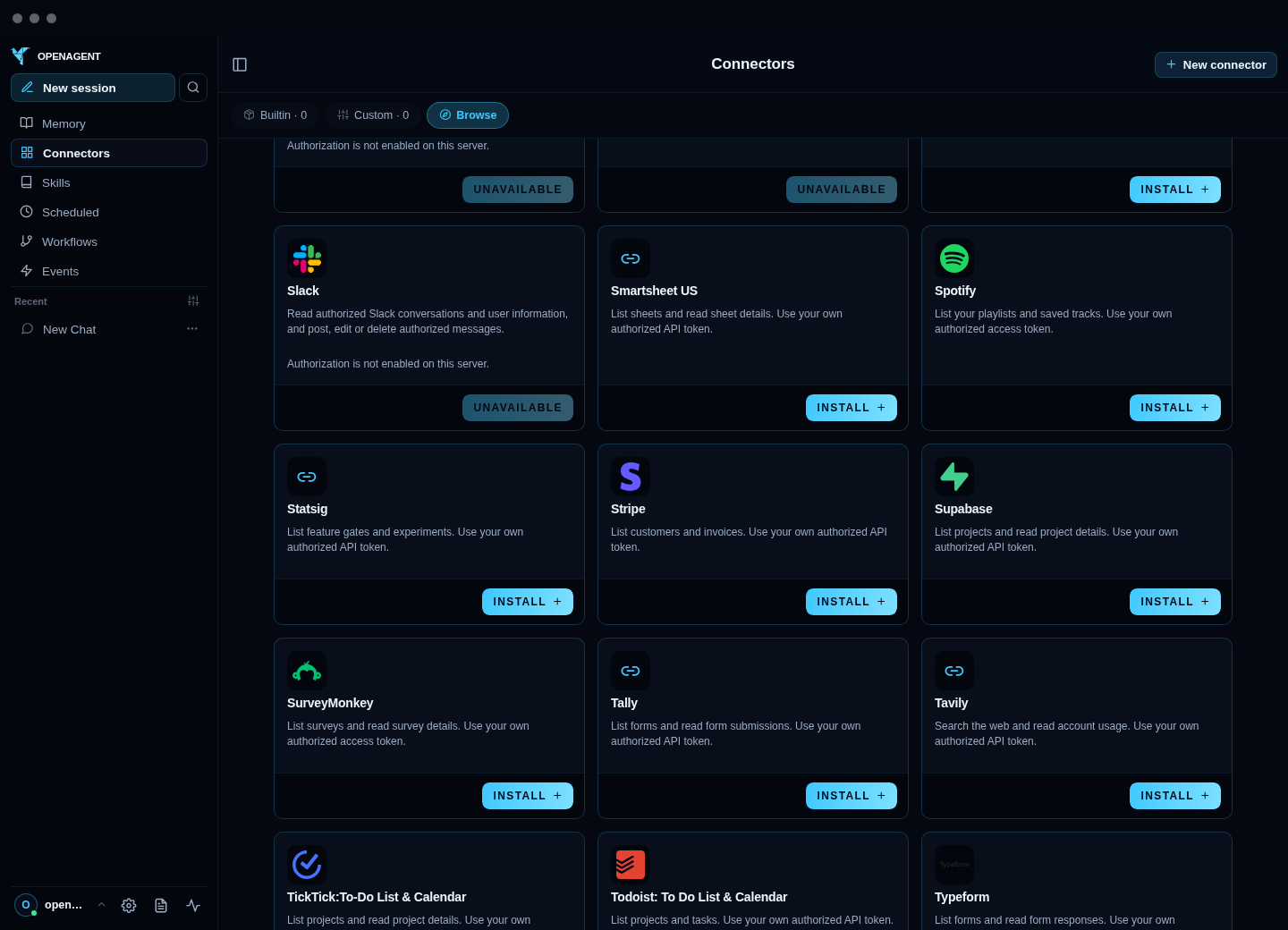
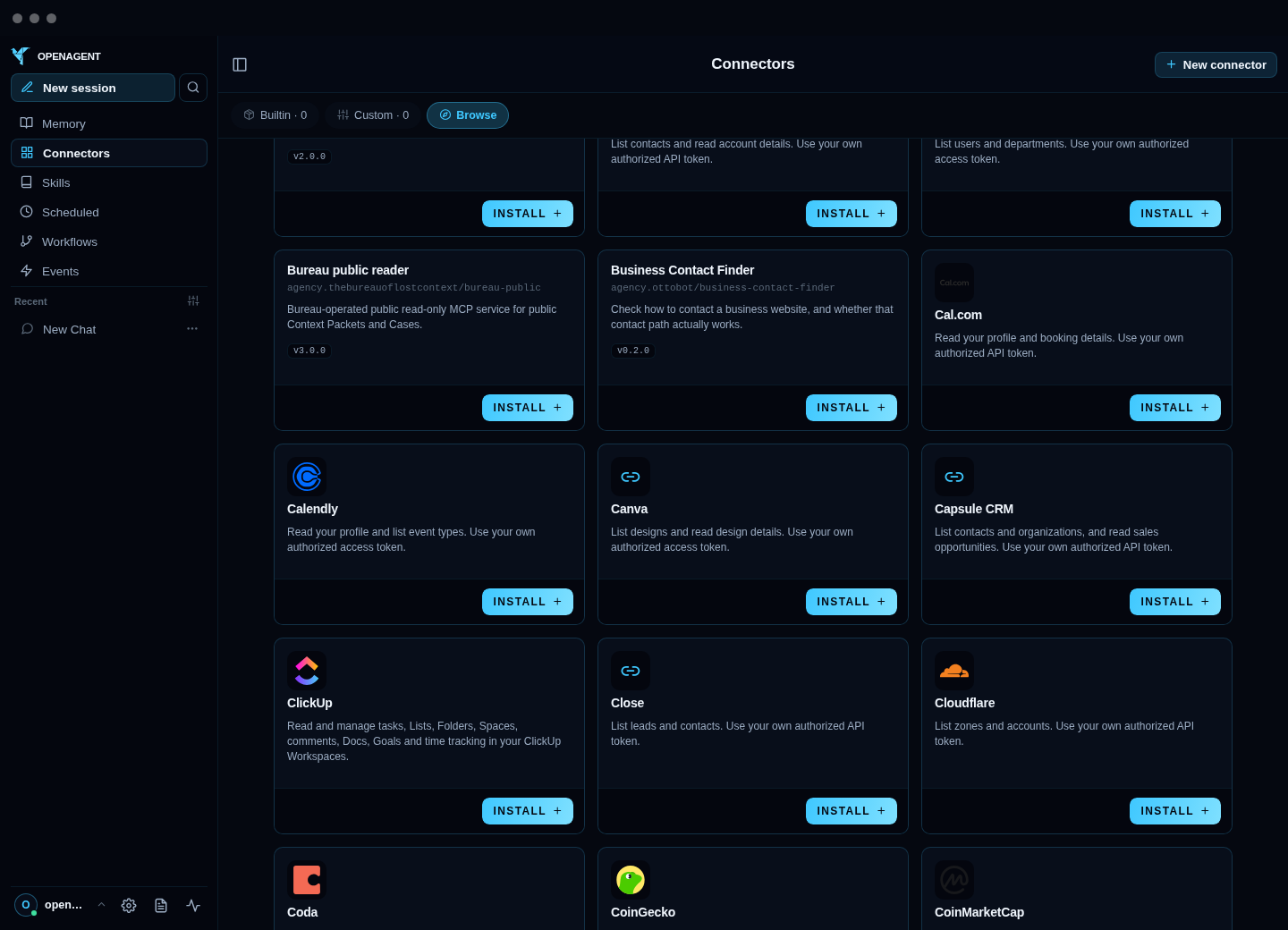
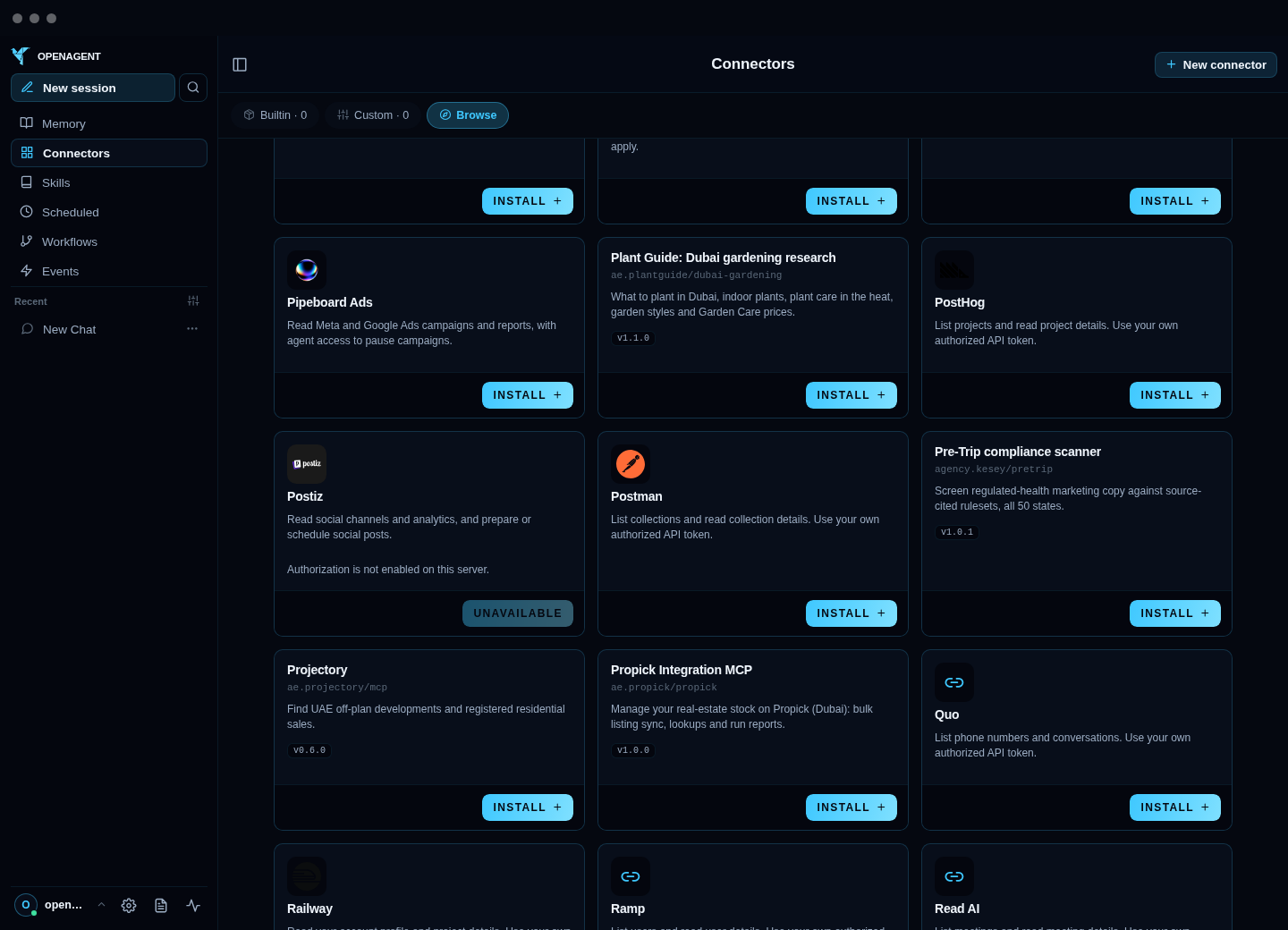
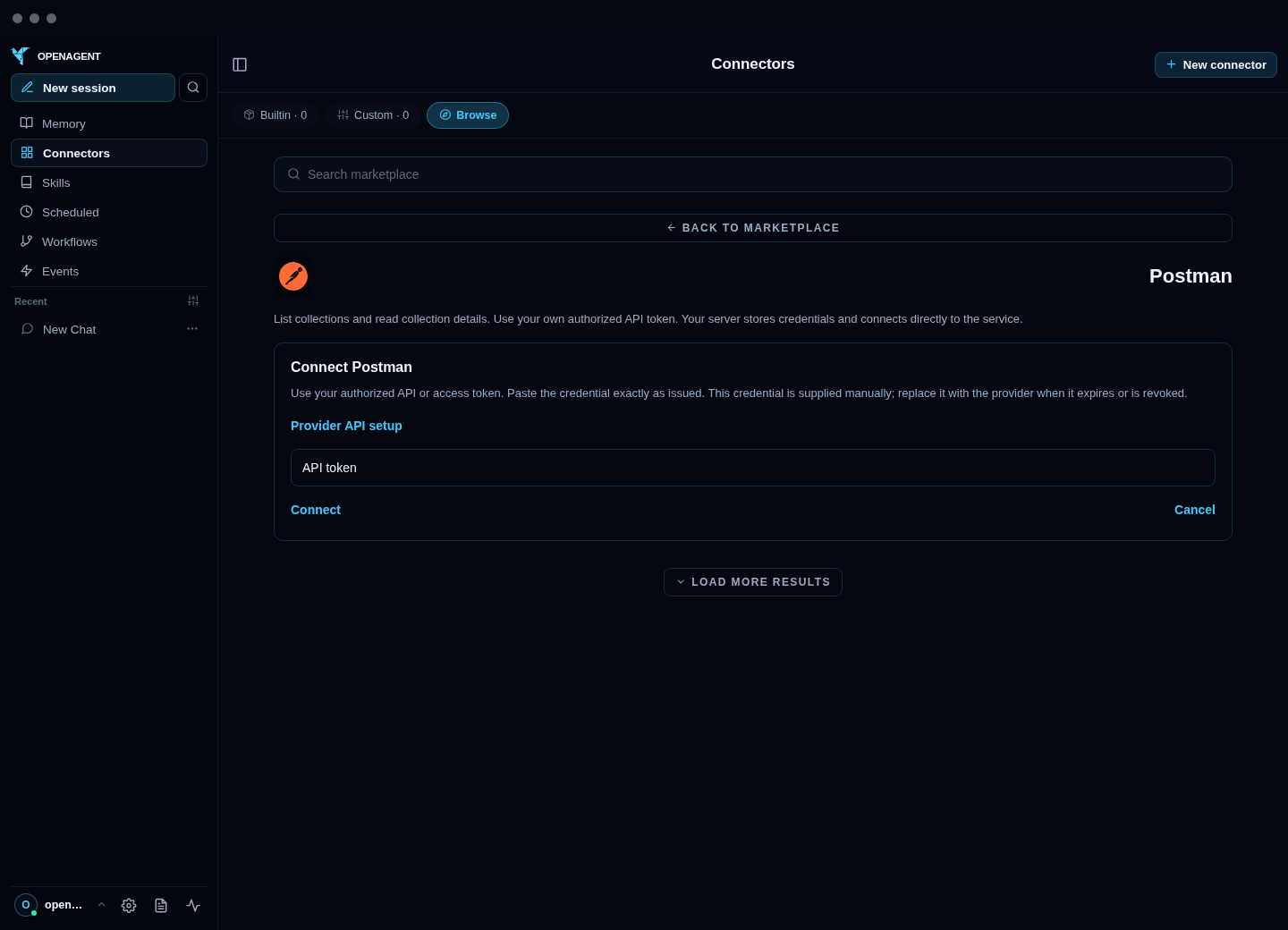
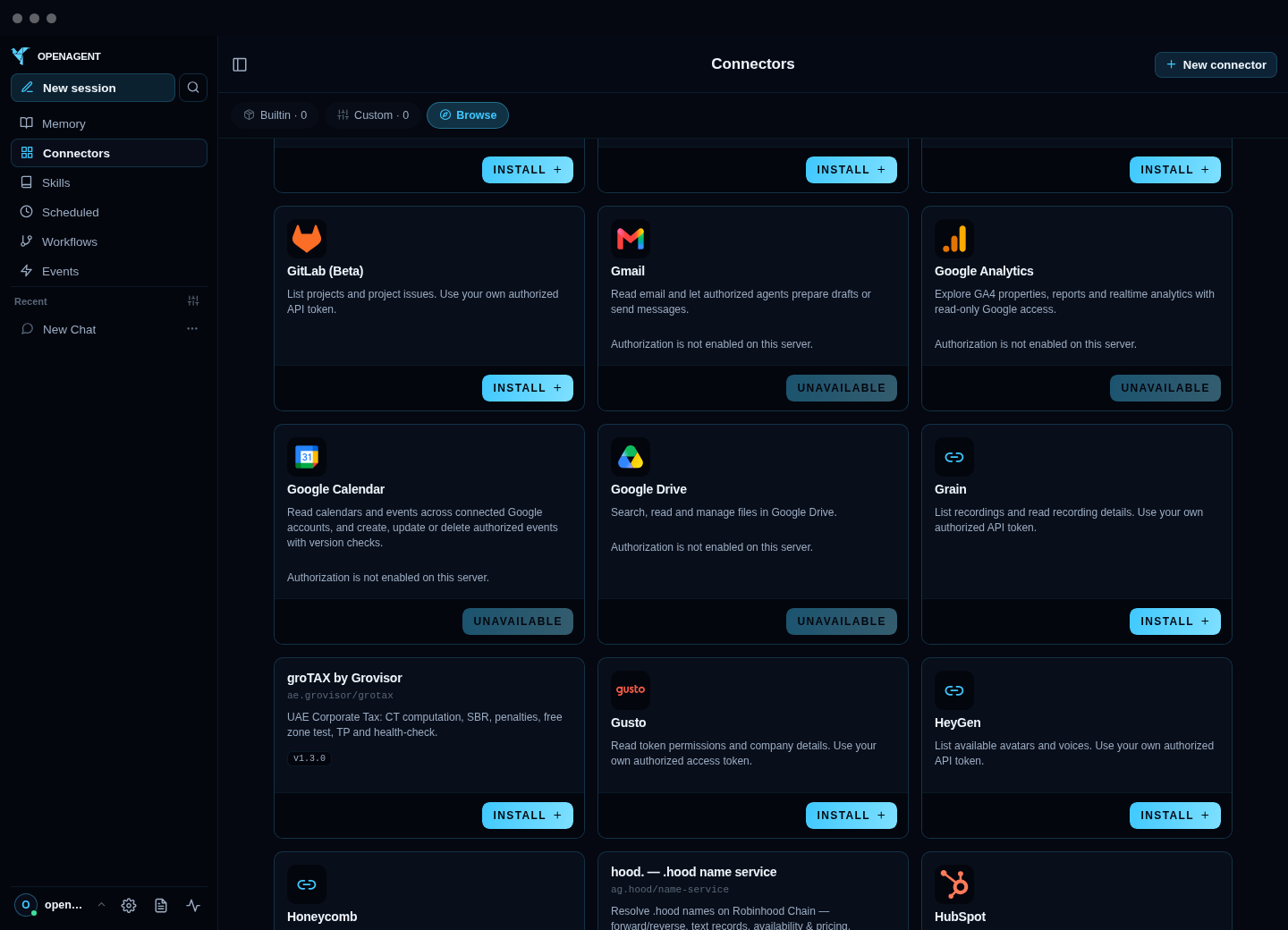
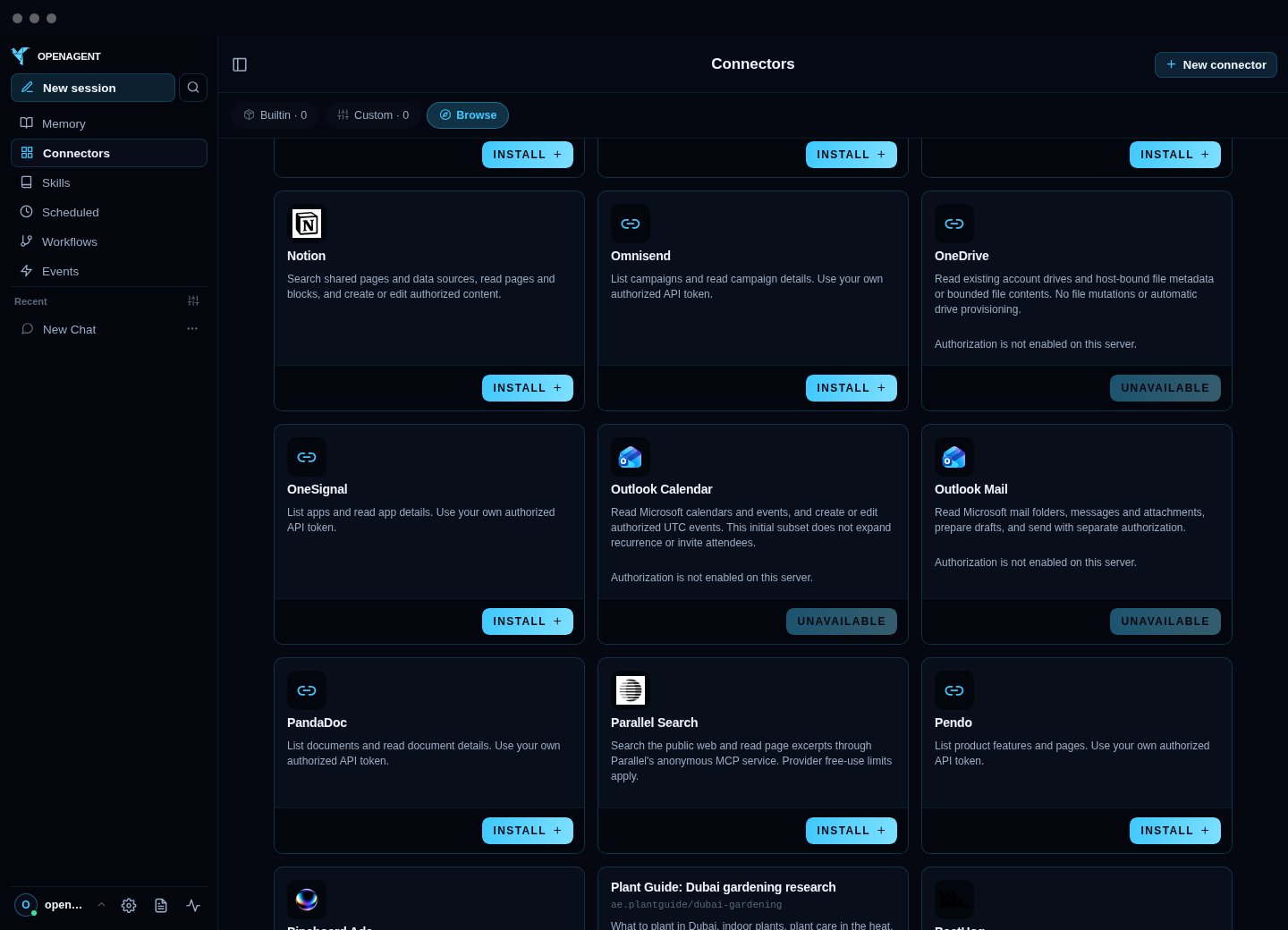
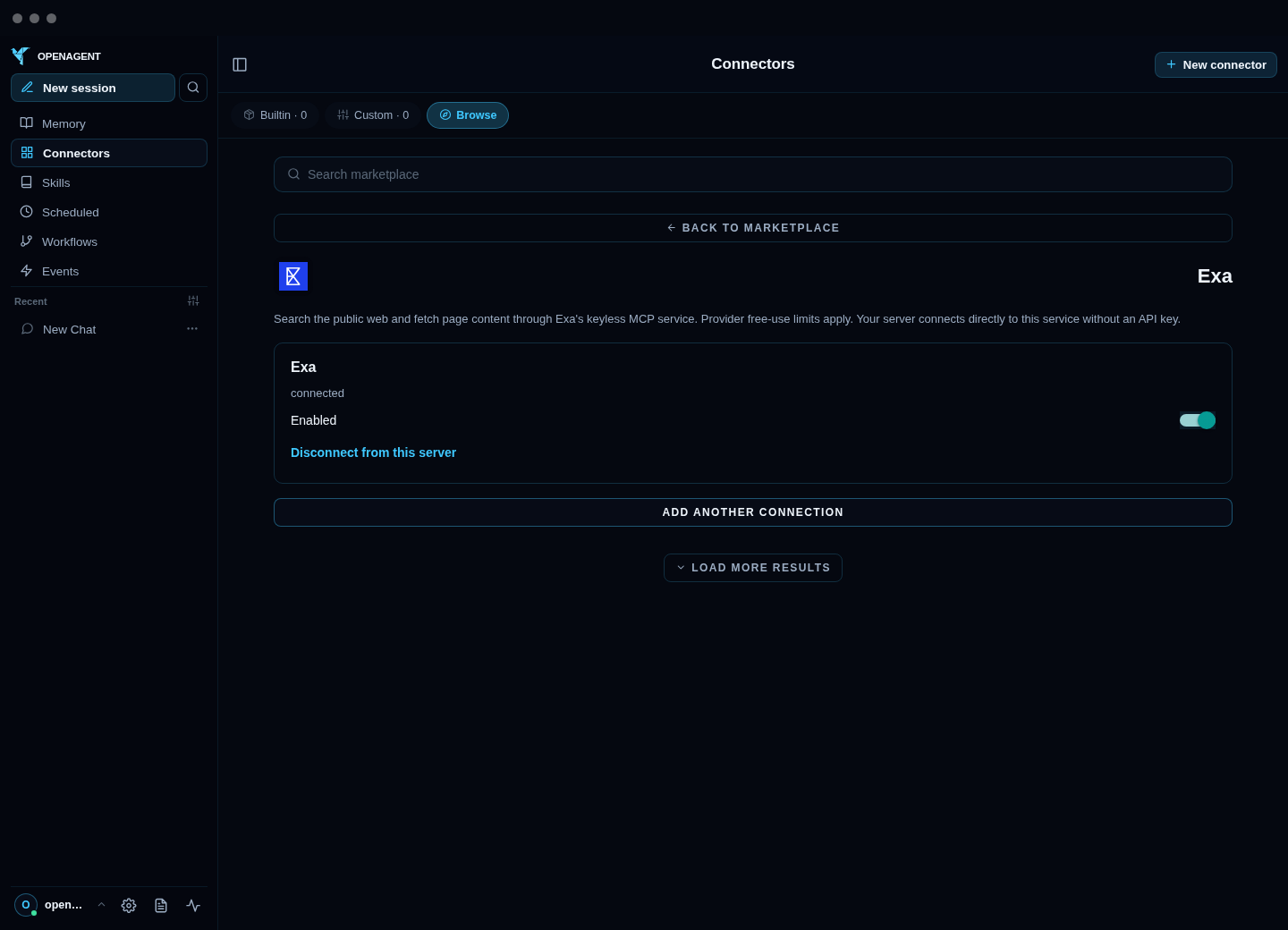
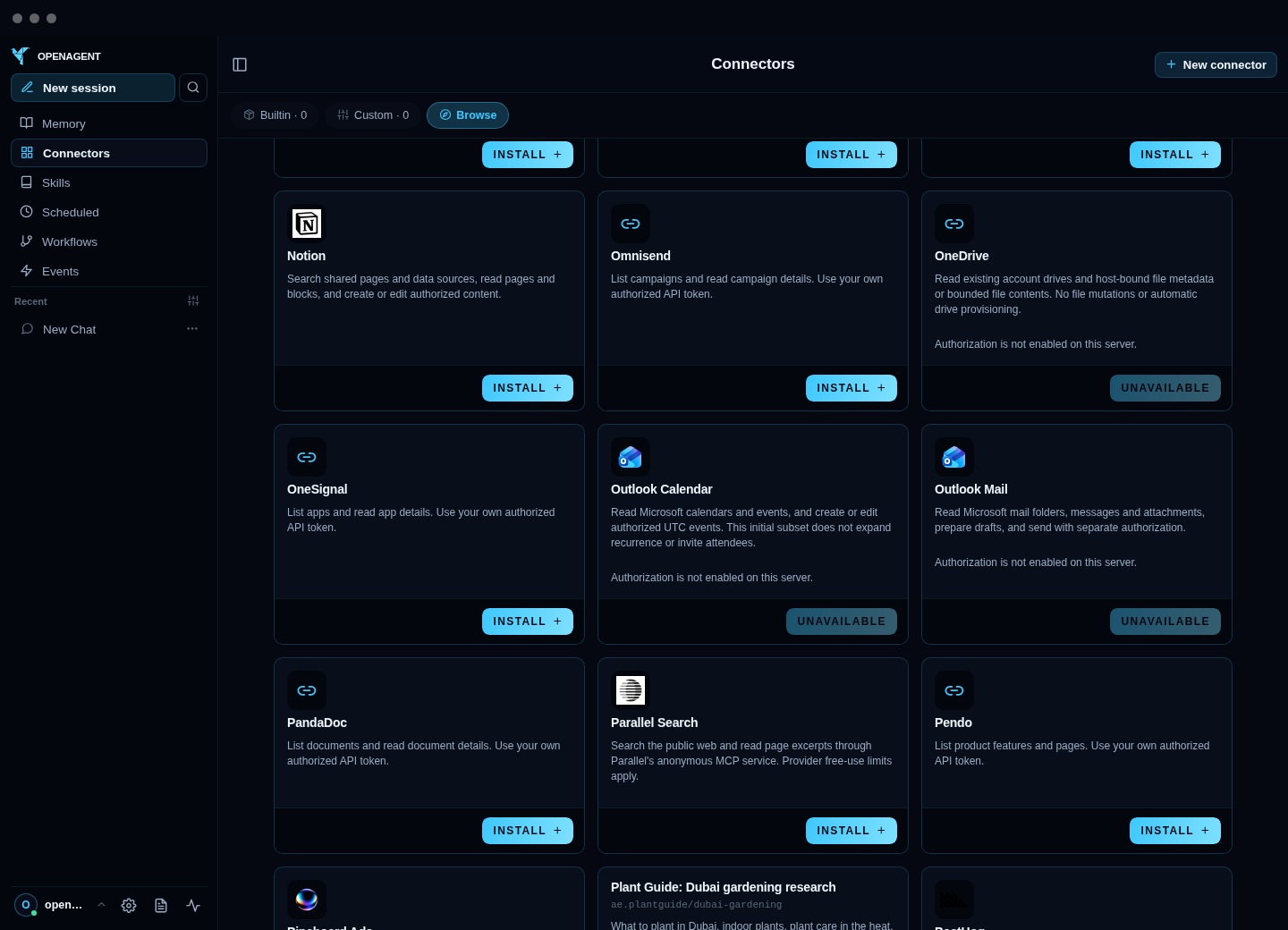
The App22/server45 receipt binds all ten original captures, including Outlook Calendar, which shares the same viewport as Outlook Mail. The public Linux x64 package used the normal public installer, ordinary Join/SRP, device certificate and native Iroh. The grid contained 114 official connectors and 30 real registry entries, with no official tab, label or divider. All 45 shared SVGs and 12 bundled marks passed load checks and visual review. Postman setup remained blank and was cancelled; Exa passed one local connect, disable/re-enable and disconnect cycle. Google Calendar, Outlook Mail/Calendar, OneDrive and SharePoint were unavailable by default. No provider call, model turn, token entry or OAuth grant occurred. Exact owned-process, staging and worker cleanup passed. Hosted --no-sandbox does not qualify sandbox security or Mac/Windows marketplace GUI.
Historical App21/server44 screenshots and scope
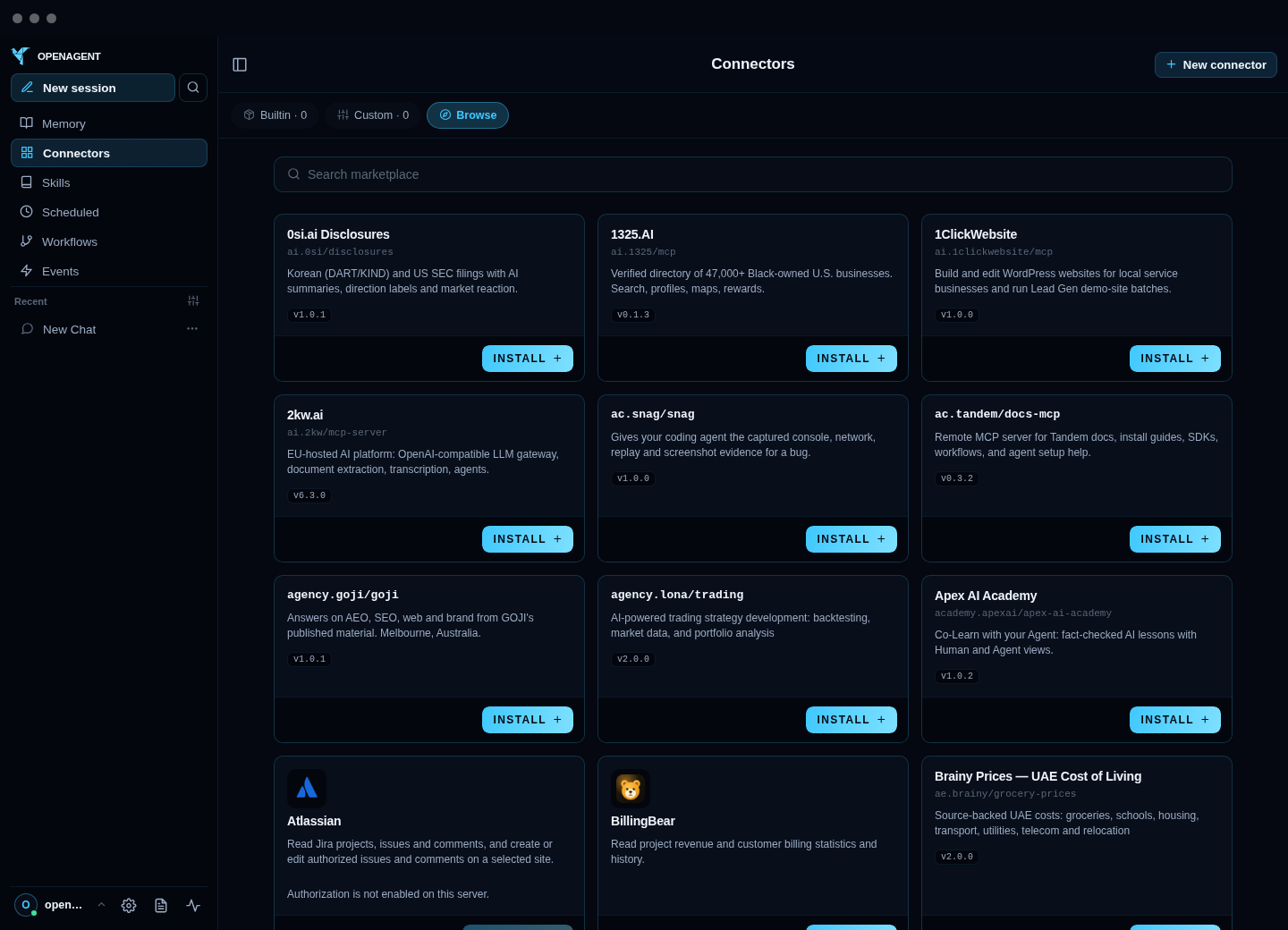
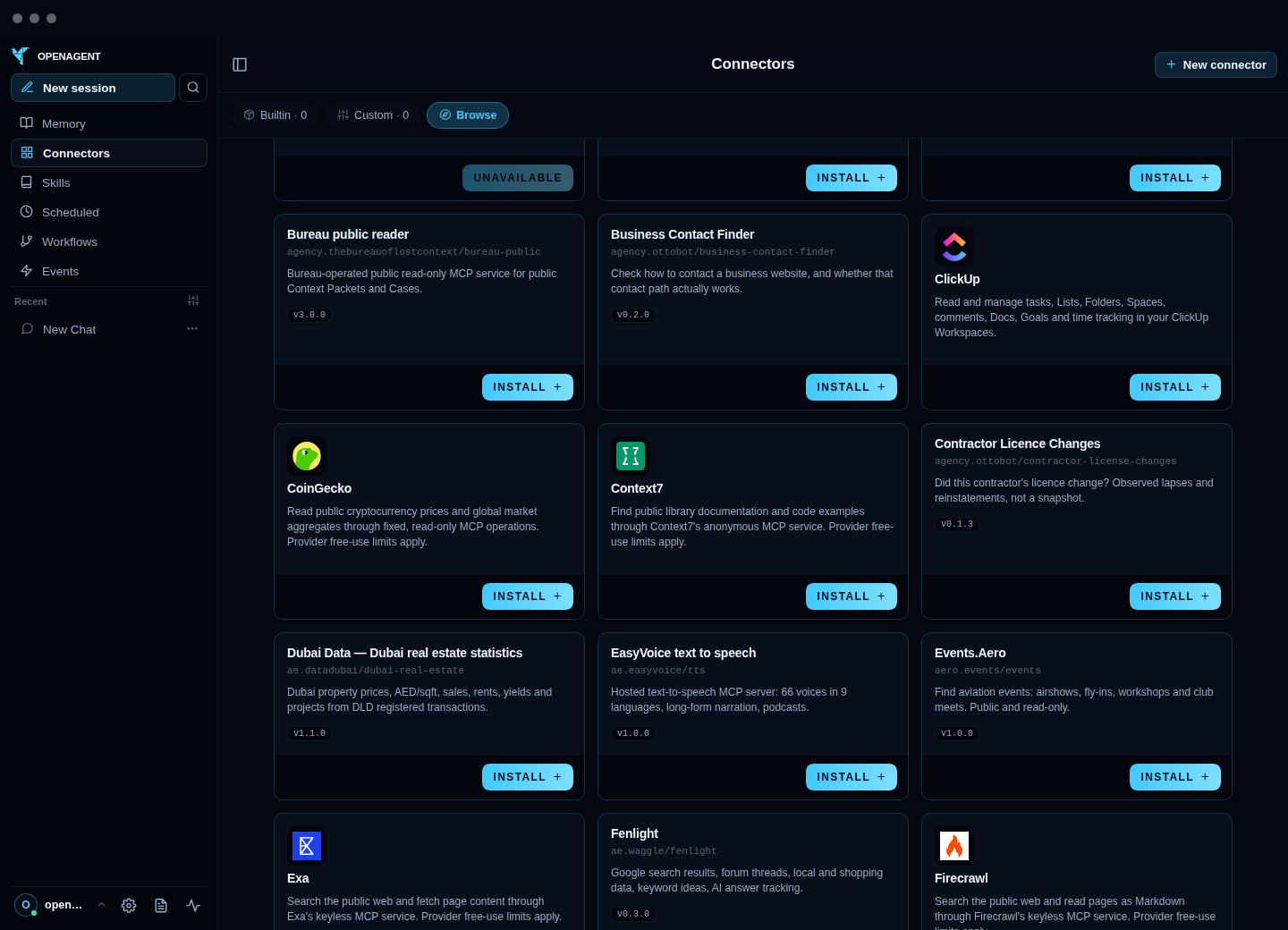
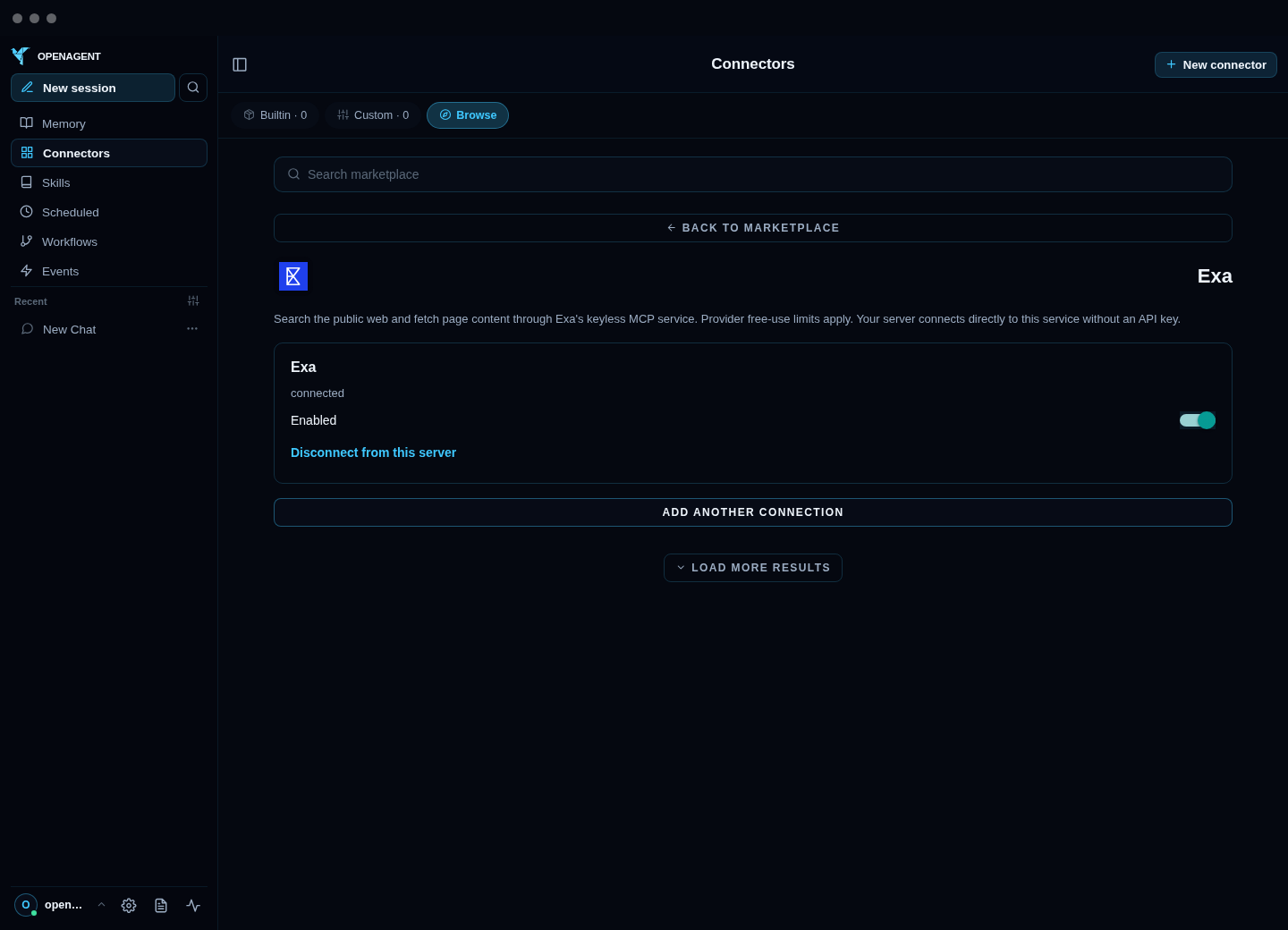
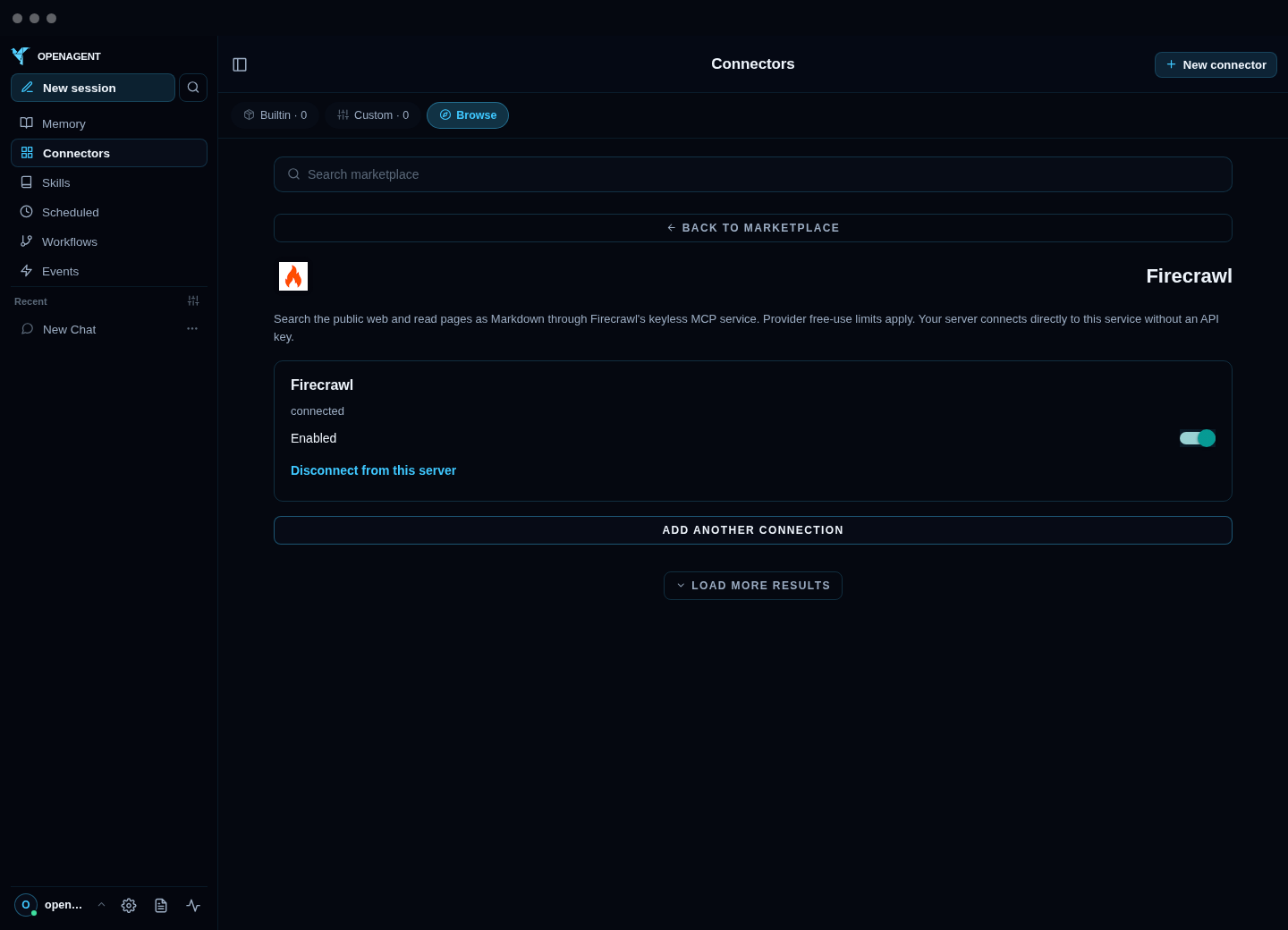
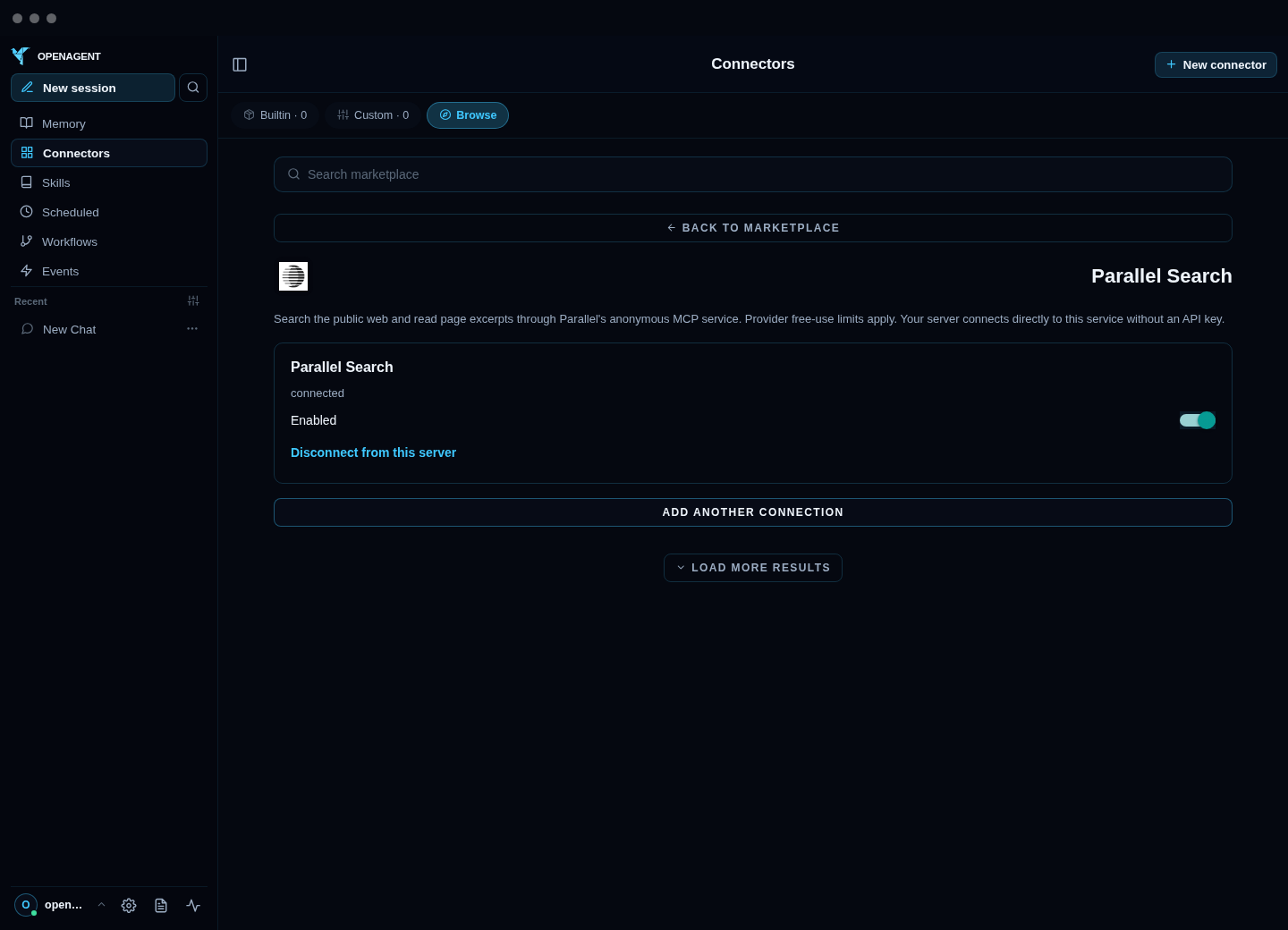
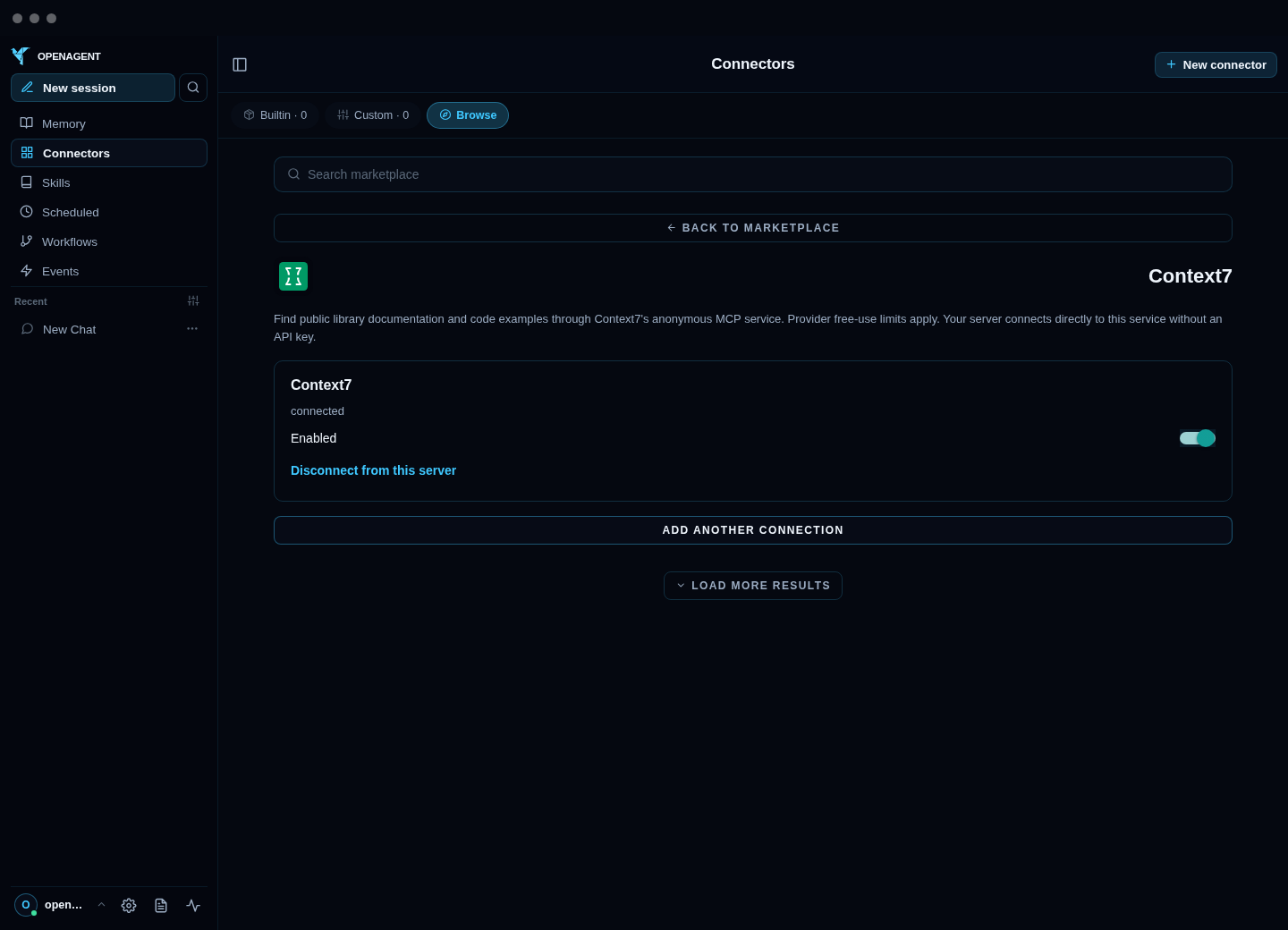
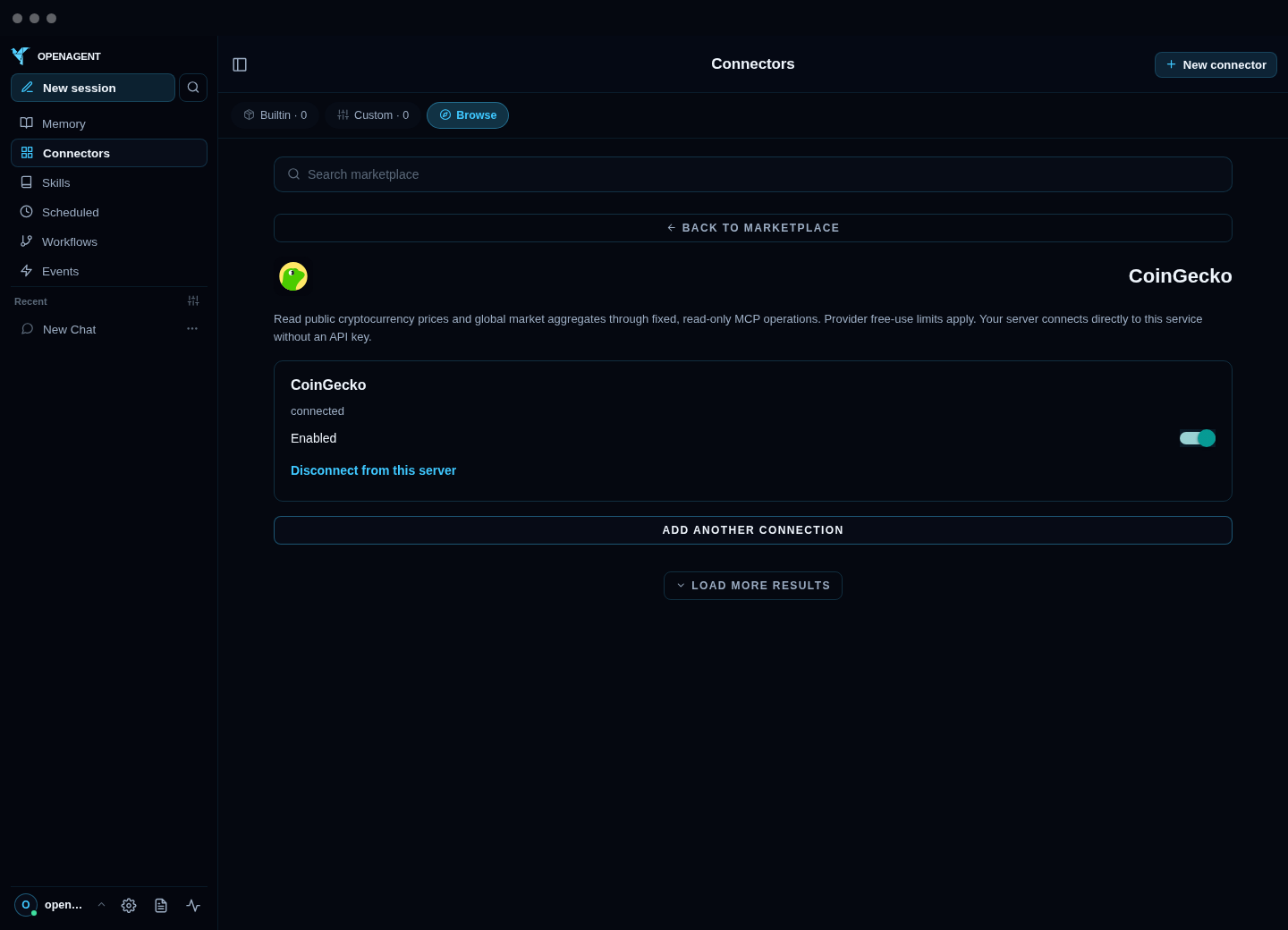
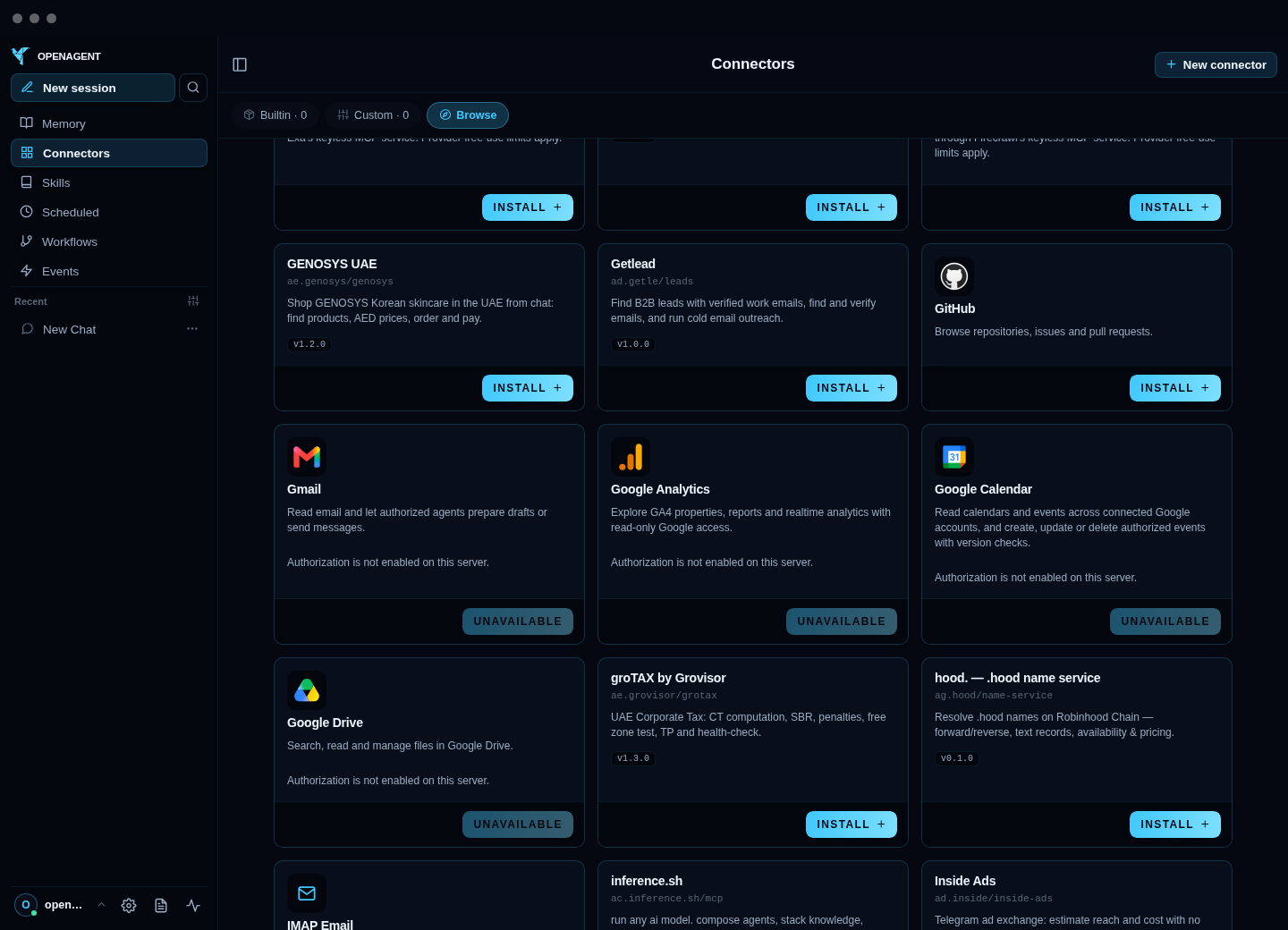
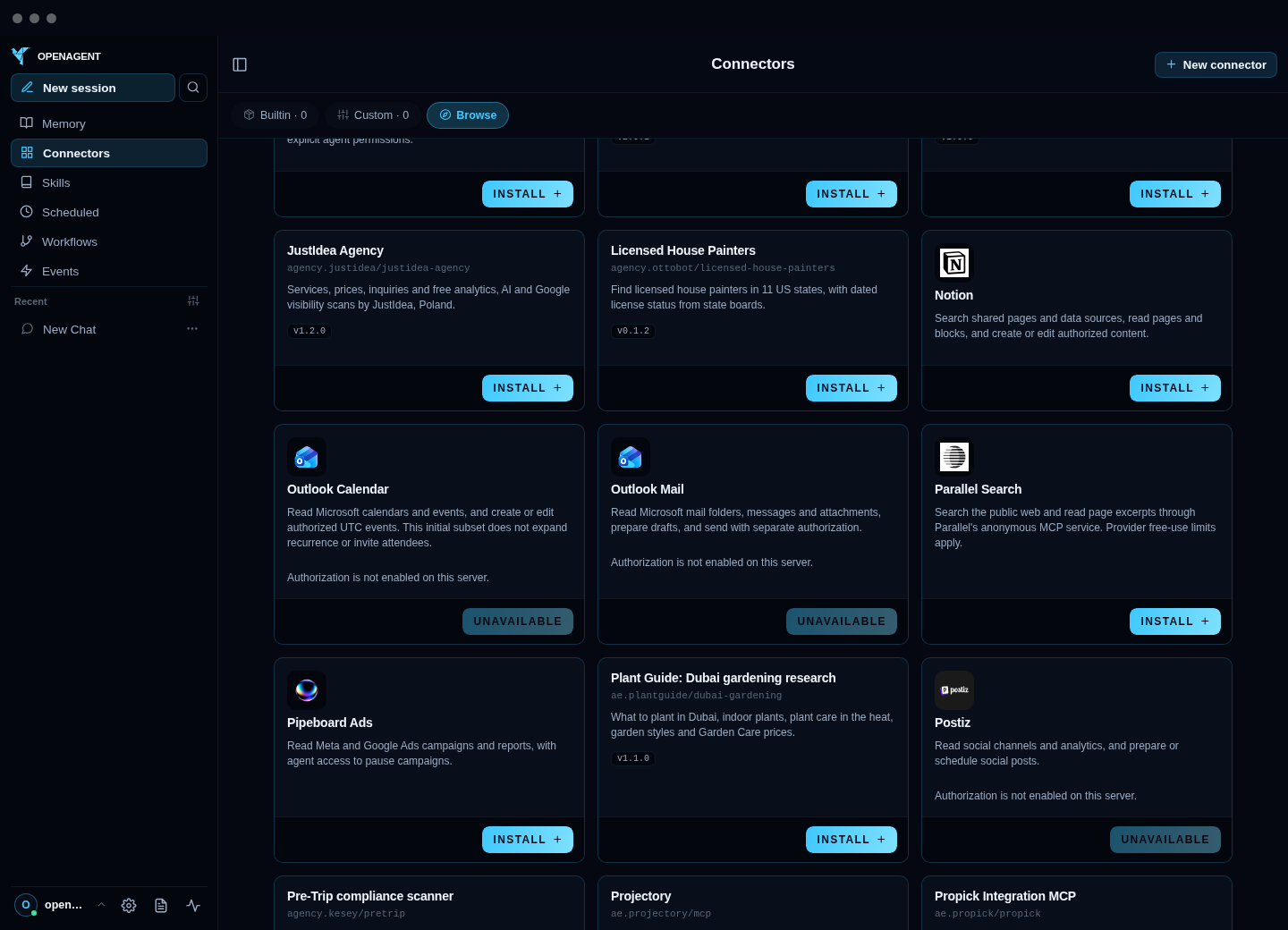
These actual Linux x64 App21/server44 screenshots use ordinary UI/SRP, device certification and native Iroh. The catalog contains 22 official entries and 30 real registry results in one grid, without an official tab, label or divider; 12 local marks passed load/DOM checks. Five keyless providers passed local Connect, disable/re-enable and disconnect without provider calls or model turns. Three additional image files target Calendar/Outlook in two unique views; the Outlook Calendar capture is byte-identical to the Outlook Mail view because both cards are fully visible together. The App21/server44 Linux x64 marketplace receipt records hashes, visual review and exact owned cleanup. Hosted --no-sandbox does not qualify sandbox security, Mac/Windows GUI or real Google/Microsoft access.
Historical App20/server43 screenshots and scope
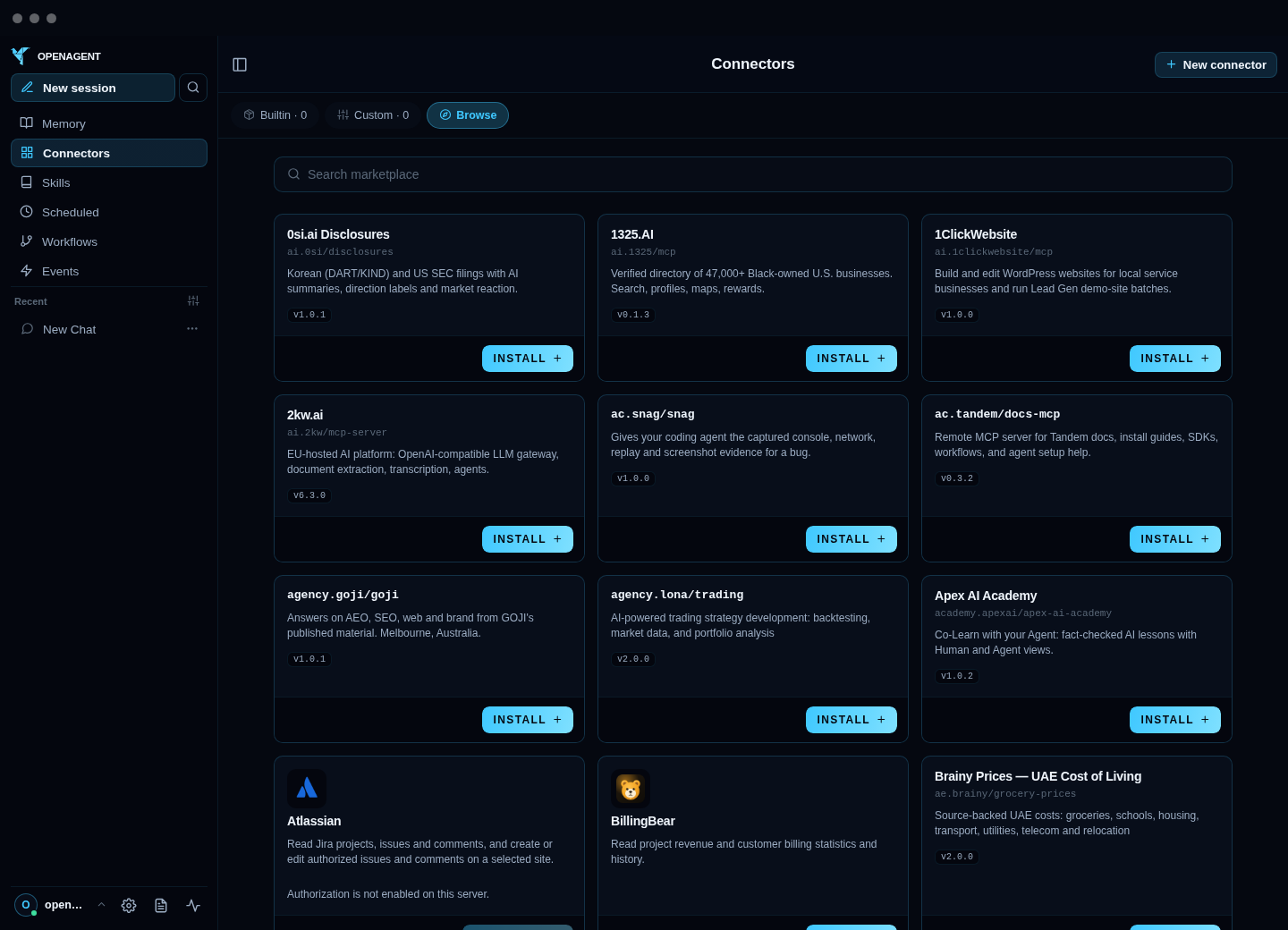
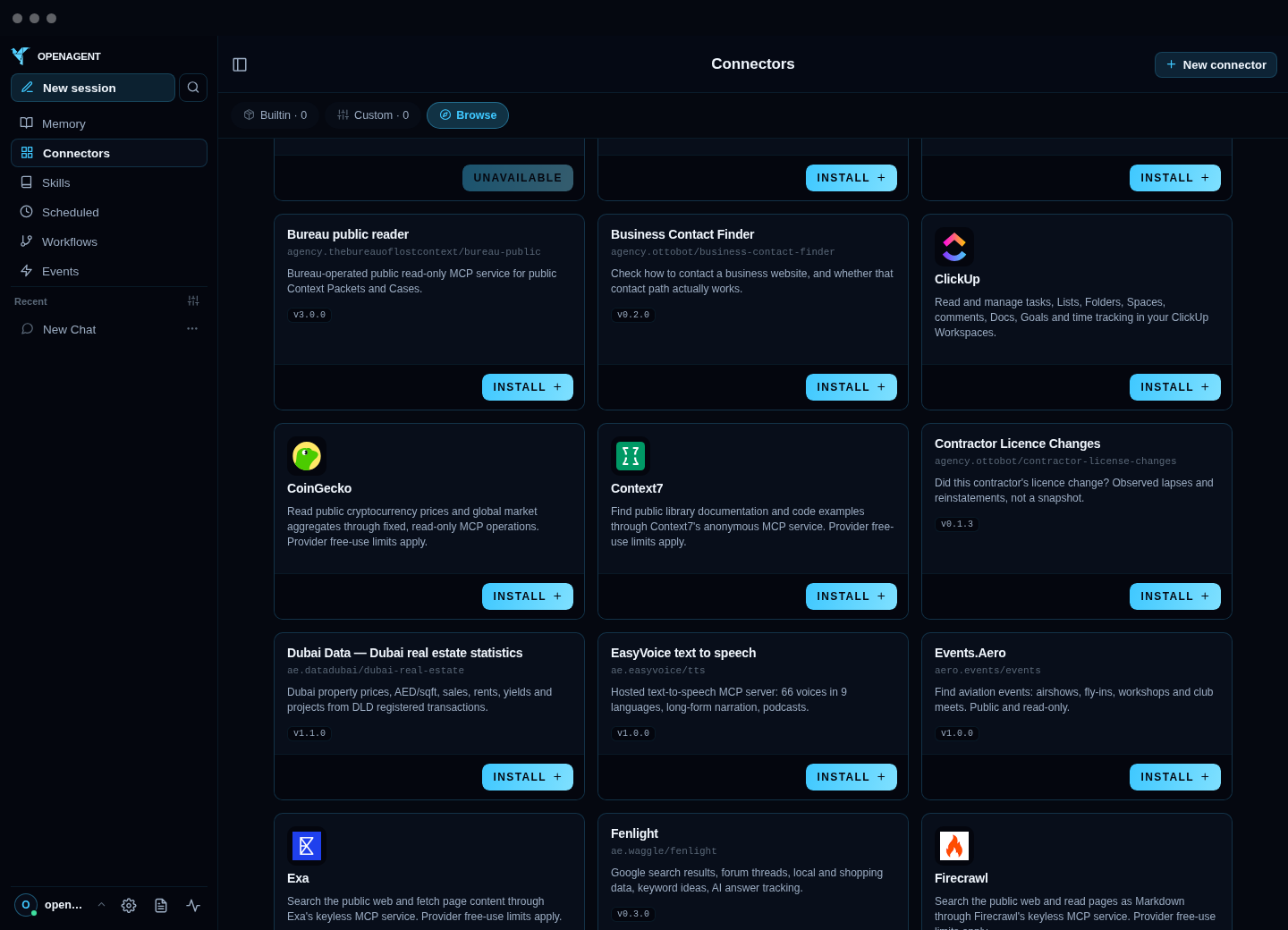
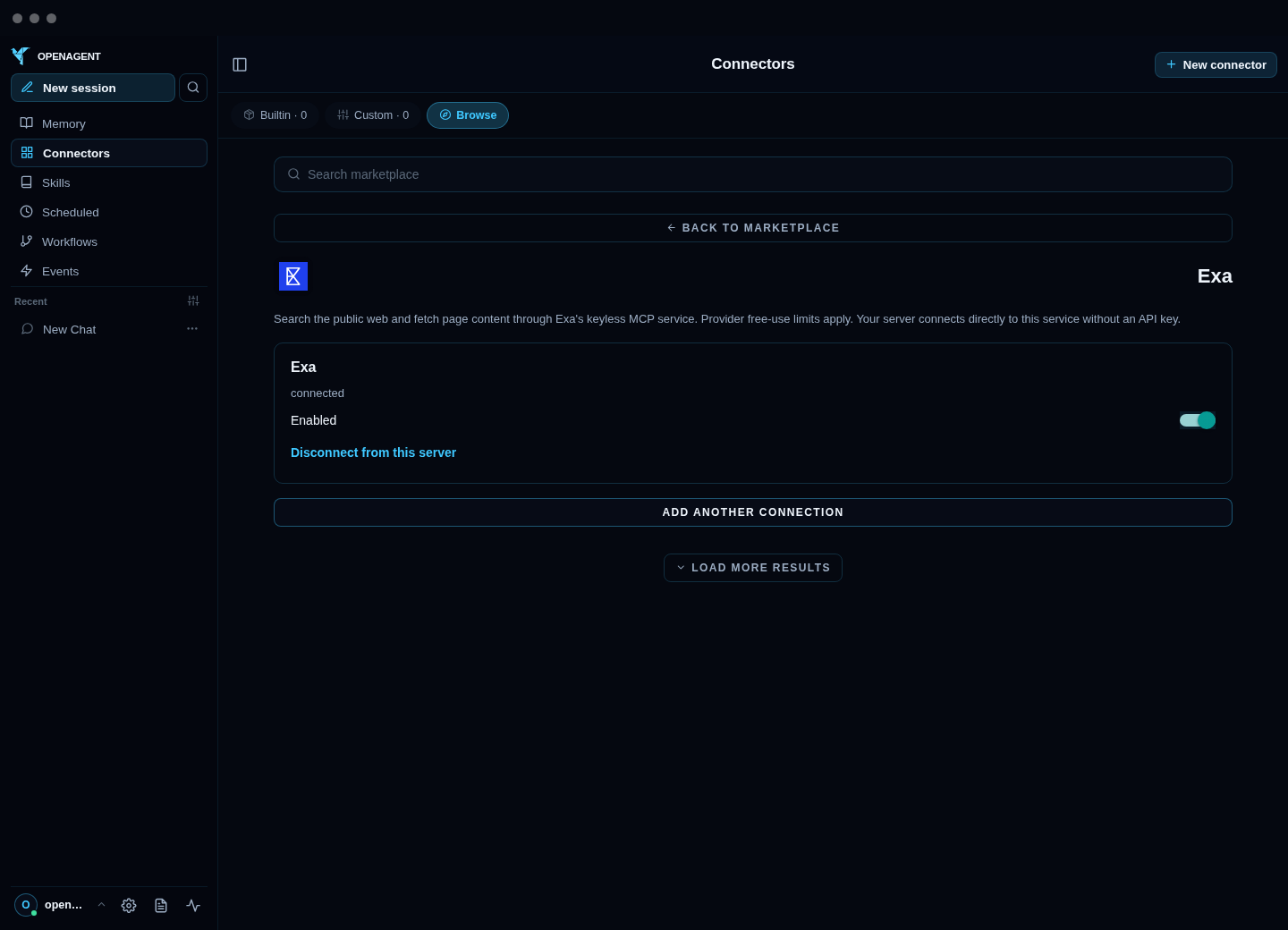
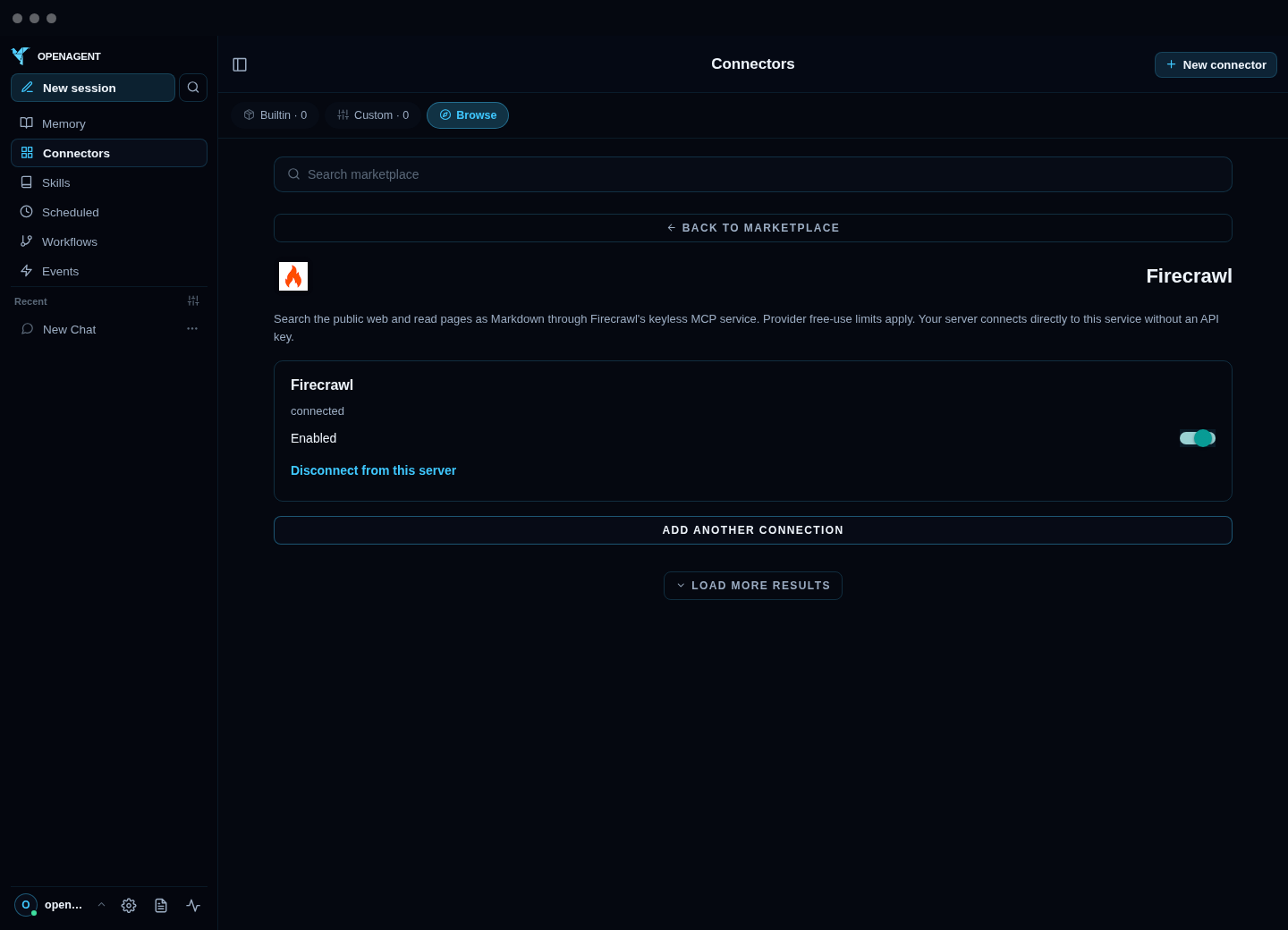
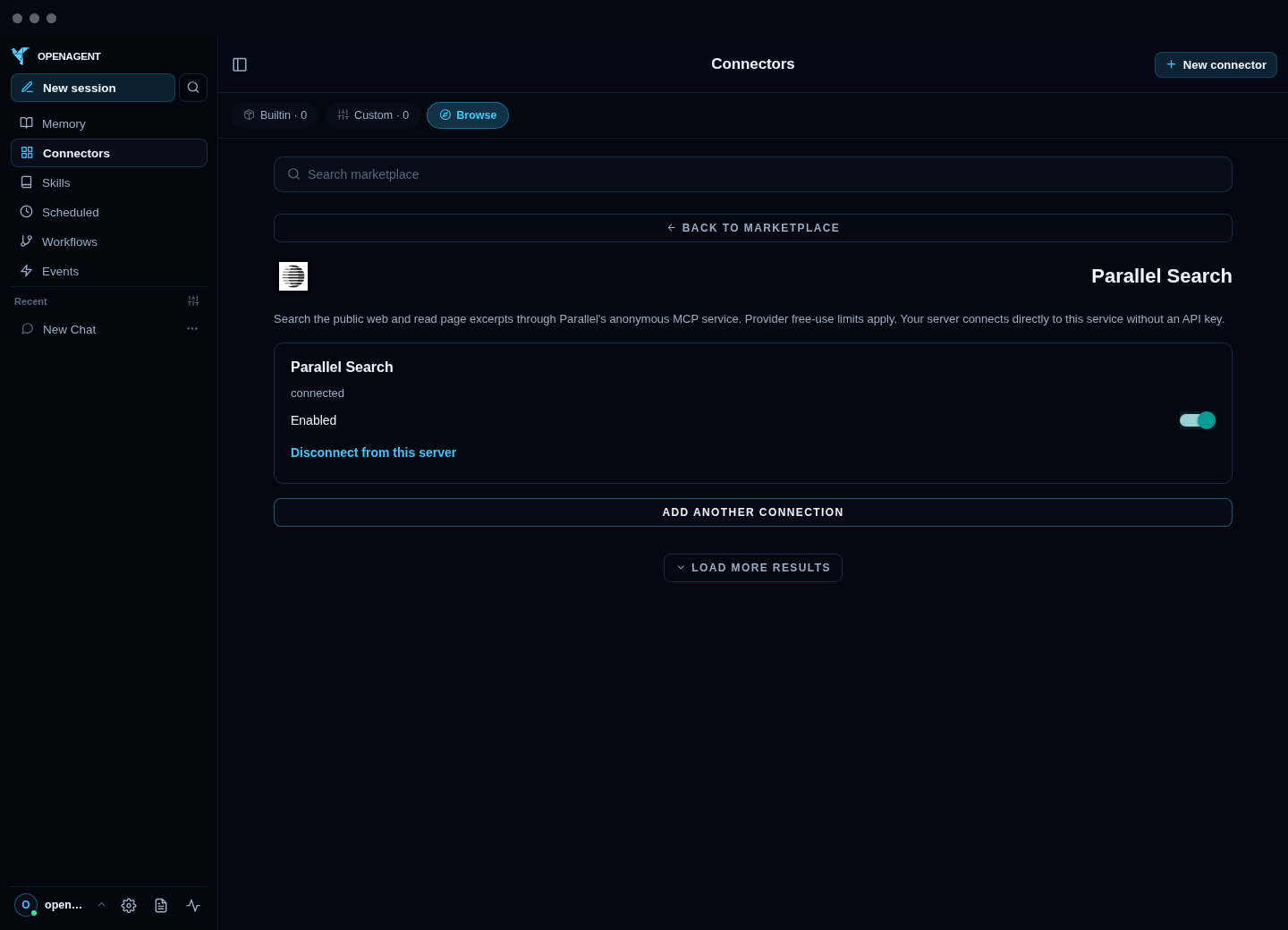
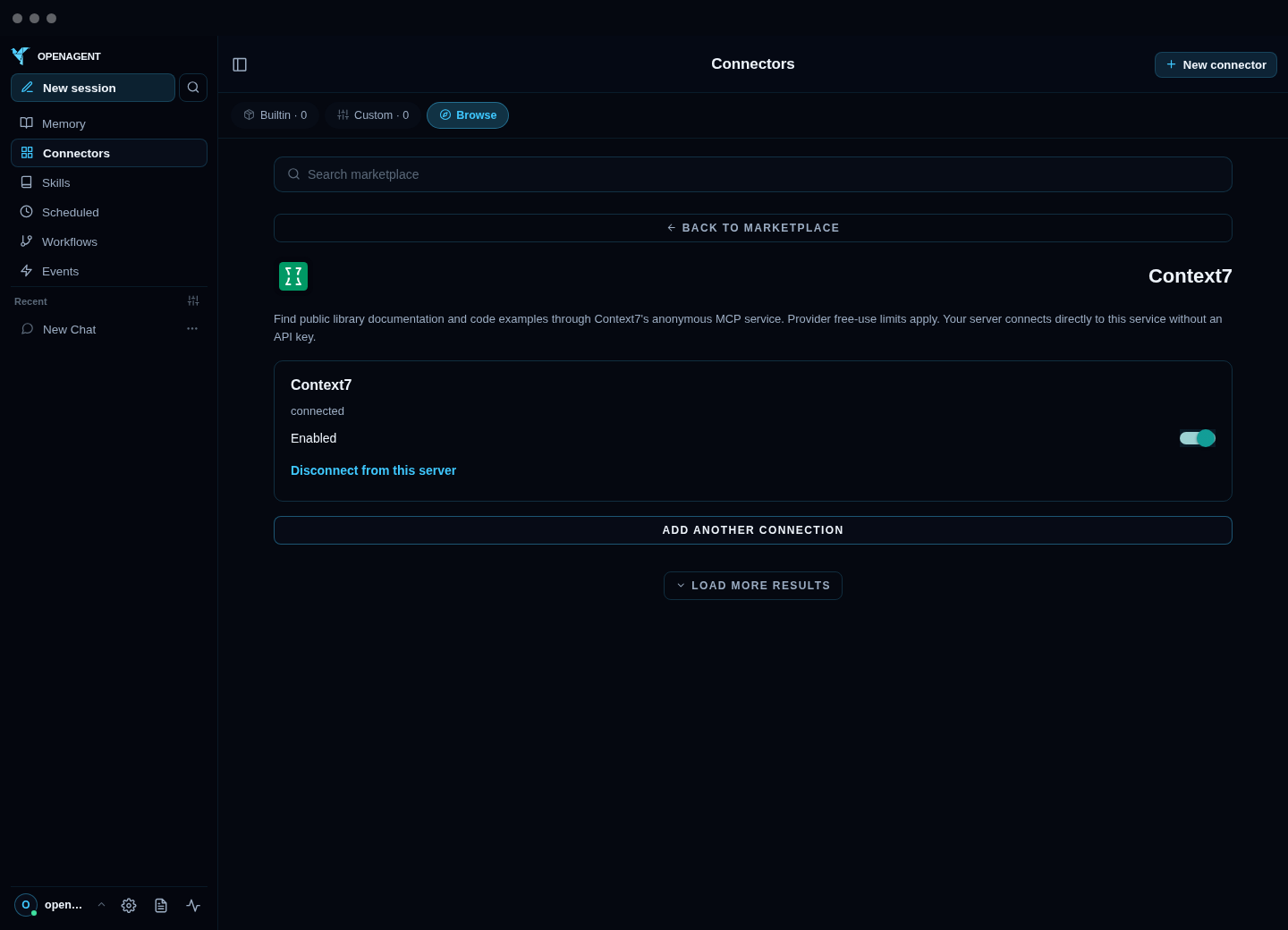
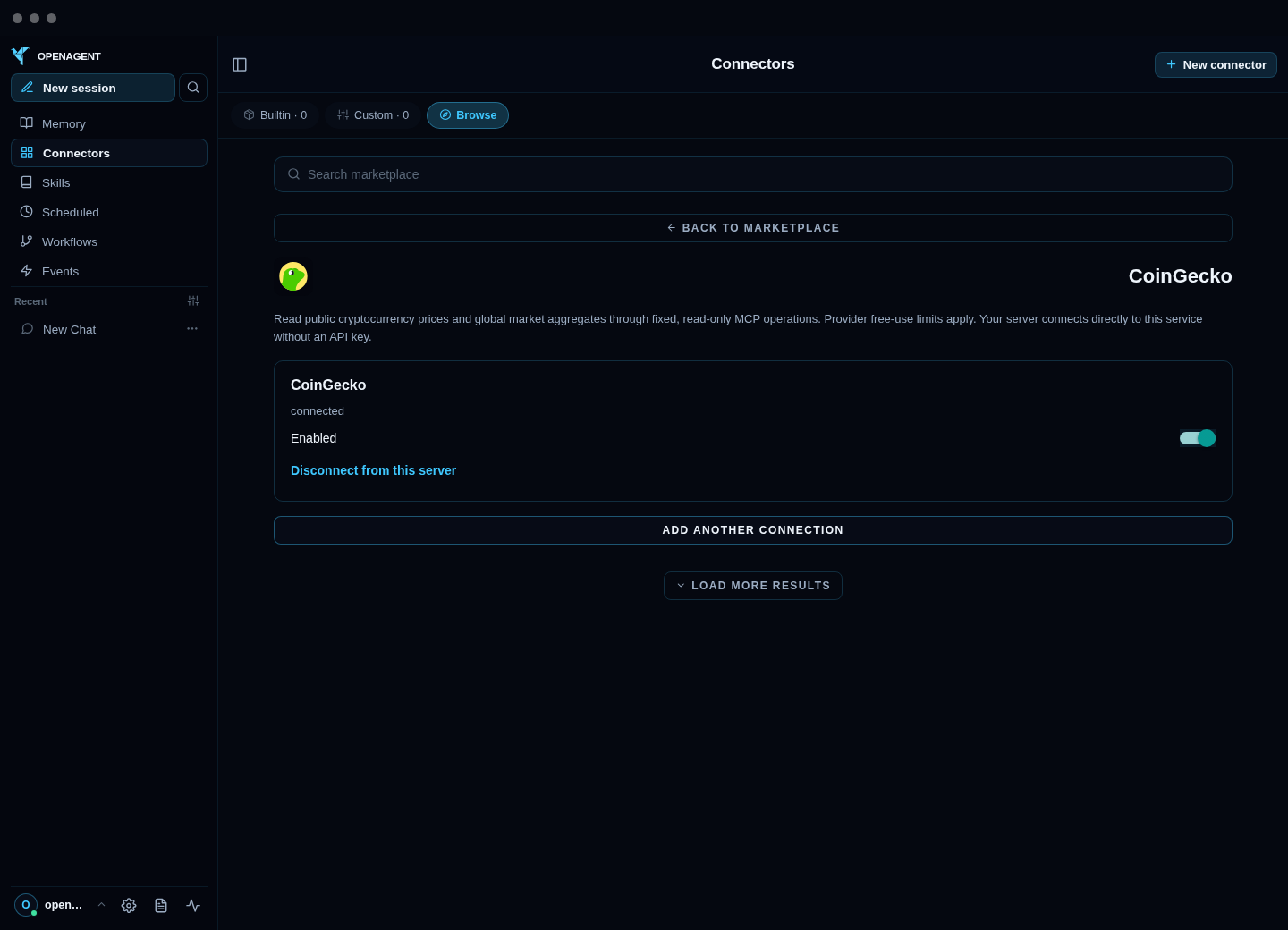
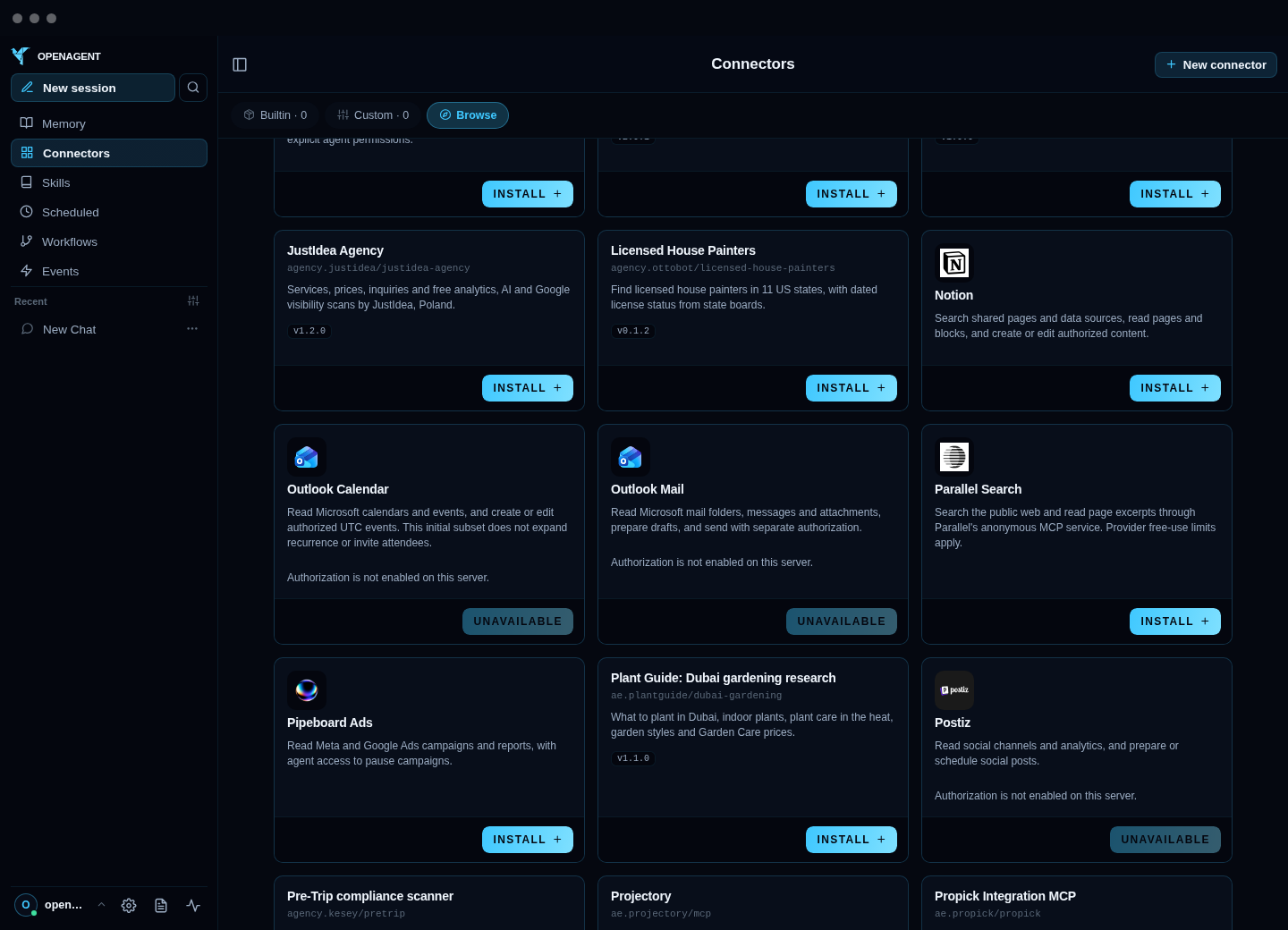
These actual Linux x64 screenshots show the public App 20 and server 43, joined through ordinary UI/SRP, device certification and native Iroh. The marketplace loaded 19 official entries and 30 real registry results without an official tab, label or divider; nine bundled provider marks were verified. All five keyless providers passed Connect, disable/re-enable and disconnect, without credential forms, OAuth pages, provider calls or a model. Owned process and staging cleanup passed. The visual receipt records exact bytes, image review and the separately corrected cleanup guard. Hosted --no-sandbox does not qualify sandbox security, Mac/Windows GUI or provider tool parity. Earlier App 19/server 42 and App 18/server 40 screenshots and failures remain historical and unchanged.
Historical App beta 17 / server beta 39 screenshots
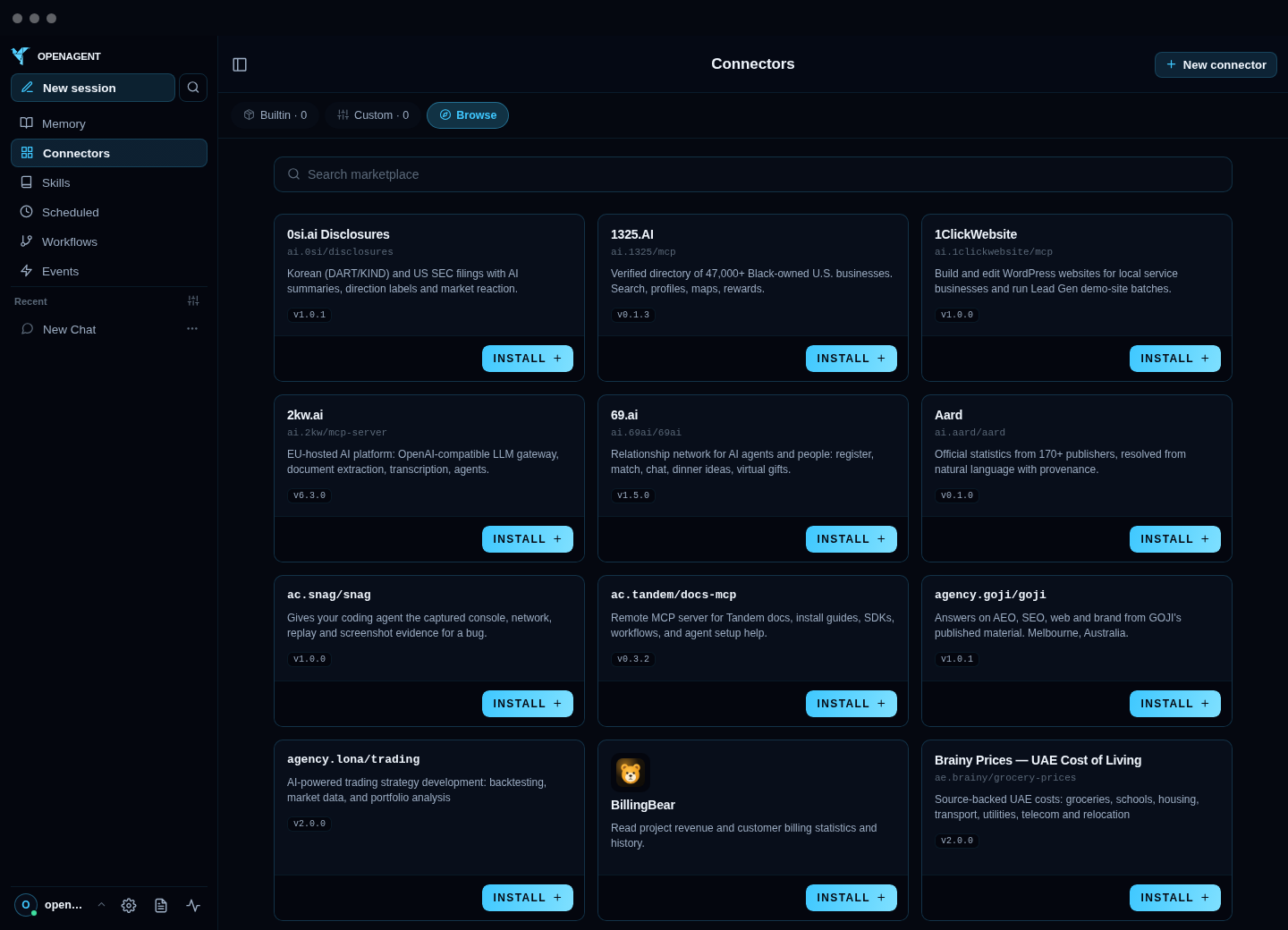
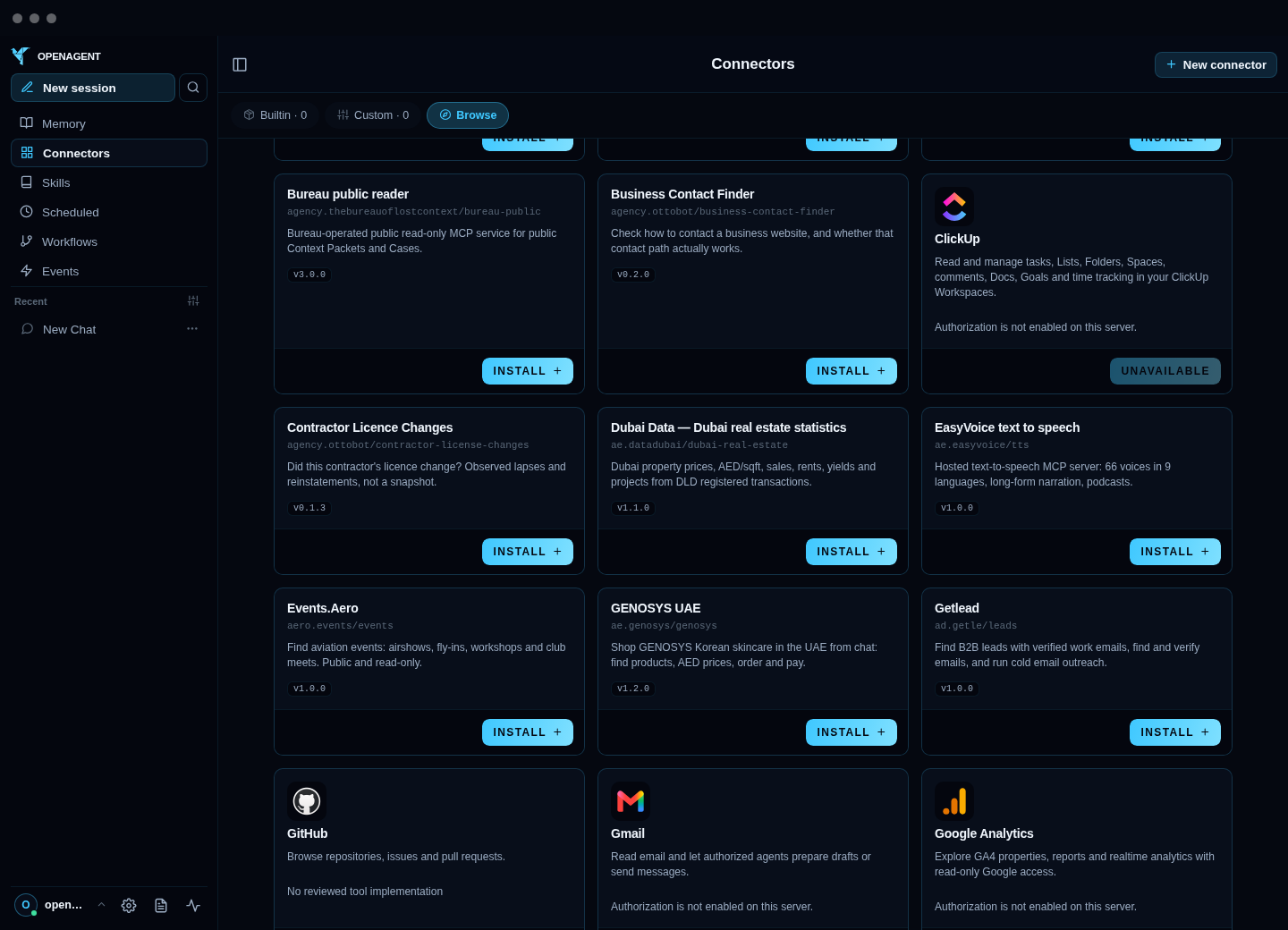
These actual Linux x64 screenshots show the released App beta 17 connected to server beta 39 through normal authenticated Iroh membership. The marketplace loaded 12 official entries and 30 real registry results in one grid. OAuth was unavailable on this disposable server; the images demonstrate the presentation, not provider consent or API access. See the qualification scope.
Embedding hosts display these integrations in their MCP marketplace alongside custom MCP endpoints. OAuth disclosure identifies the product and the particular receiving installation. Third-party products may use the shared protocol; an operator-supplied name does not mean OpenAgent has approved it.
The server exposes the authenticated catalog at GET /api/marketplace/official; GET /api/connectors/catalog remains compatible. Unavailable entries include their reason; neither response contains credentials.
The CLI uses the same authenticated server and permissions:
openagent-cli marketplace official
openagent-cli marketplace official gmail --json
openagent-cli marketplace search filesystem
openagent-cli connectors list
openagent-cli connectors connect replio
# Keyless commands use the published beta 43 CLI/server:
openagent-cli connectors connect exa
openagent-cli connectors connect firecrawl
openagent-cli connectors connect parallel-search
openagent-cli connectors connect context7
openagent-cli connectors connect coingecko
openagent-cli connectors reconnect <connection-id>
openagent-cli connectors refresh <connection-id>
openagent-cli connectors sites <connection-id>
openagent-cli connectors select-site <connection-id> <cloud-id>
openagent-cli connectors configure <connection-id> --read-only
openagent-cli connectors configure <connection-id> --disabled
openagent-cli connectors disconnect <connection-id>
Select a saved membership with --network, --agent and --handle. Tokens/account passwords use hidden interactive input, rather than command arguments. OAuth opens the browser and polls through the authenticated outgoing connection. The interactive /mcps menu also offers the official marketplace.
Keyless connections keep local owner/tenant permissions, enable/disable and disconnect controls, but store no provider token and need no refresh or provider revocation. Their quotas apply to anonymous provider access; calls do not switch to an authenticated or paid plan. The SDK 0.1.6 six-read receipt qualifies both compiled tools of Parallel, Context7 and CoinGecko through the normal runner. The beta 43 product lifecycle separately passed three normal connections and six authorized workflow reads across a real restart, followed by tombstones/source removal and cleanup. Its metrics describe workflow-result bytes, not observed provider HTTP attempts. Exa/Firecrawl real reads retain their SDK 0.1.5 and beta 41 lifecycle scope. Search API success does not establish result relevance. GUI-local controls above made no provider calls and do not extend those receipts.
Each server keeps its own encrypted token copy. Connecting the same Shopify shop to another server requires a fresh verified Shopify consent and explicit authorization of that recipient. Token rotation is serialized per app/shop and synchronized in temporary encrypted messages. A server that missed a message can request a current peer copy; if none is available it needs a new consent.
Disabling a connection prevents tool use without deleting its saved credentials. Where supported, Allow changes additionally controls mutating operations. Embedding hosts also retain workspace/project scope and explicit agent grants; saving a connection does not grant every agent access.
Disconnect from this server removes that product's local access. Removing/revoking the app in the provider's settings can affect other products using the same app. Reconnection requires consent; existing credentials are never silently reassigned to another OAuth app.
Privacy and availability
Read the OpenAgent privacy notice for data handling, retention, configured model providers and privacy requests. Support and privacy contact: geroale2000@gmail.com, under the AI Agent commercial name.
auth.openagent.uno handles authorization-code exchange and renewals that require the app secret. Access tokens and refresh tokens are transient during those operations and are not stored permanently by OpenAgent's central service. Normal email, file, store and task API contents do not pass through it.
The service durably stores installation identities, authorized Shopify recipient groups, credential generations/fingerprints and a deduplicated queue of minimized, encrypted Shopify privacy/uninstall notifications. Temporary encrypted token messages expire within ten minutes. Privacy actions and exports belong to the receiving product. Standalone beta 39 publishes strict opt-in processing via connectors.privacy.enabled=true for a fresh canonical text-history cohort; coverage is computed before startup, not declared in configuration. Historical content, media, Vault/files and unqualified callbacks keep jobs blocked. This does not activate Shopify; provider reviews and real end-to-end acceptance remain separate gates. See the coverage and release checkpoint.
A central outage prevents new common-app consents and secret-dependent renewals. Locally valid tokens and other local/MCP capabilities continue to work. Hosts can retain their own OAuth registrations instead of opting into common apps. Standalone servers can configure connectors.oauth_providers_file for Google, ClickUp or Postiz, with registered loopback callbacks and local secret files; Shopify own apps use a separately configured broker to retain shared-store coordination. Google restricted scopes still require applicable verification/security assessment.
Embedding and releases
The library is openagent-tools/packages/connectors, with a local runner and Python/MCP adapter. Versioned platform bundles carry manifests and checksums; product builds pin them. Core integrates through public capability APIs. The deployment runbook describes provider registration and activation gates.
Connection requirements by service
| Service | Setup details |
|---|---|
| 90 provider API profiles | Dedicated authorized API/access token; two read tools per provider; local encrypted storage and provider permission checks. App22 Linux x64 cards and blank Postman setup passed; live provider access requires its own authorized trial |
| OneDrive, SharePoint | Authorized Microsoft OAuth app and account consent, followed by server-verified drive/site selection; OneDrive bounded read lifecycle passed on server45, while eligible-account SharePoint consent and site access remain pending |
| Exa, Firecrawl, Parallel Search, Context7, CoinGecko | Keyless since server/CLI43 and App20; Linux x64 local controls passed; no account, key, OAuth consent or refresh; anonymous quotas and per-tool qualification limits apply |
| Google Drive, Gmail, Google Analytics | Provider consent through the configured Google app; Google Analytics needs an accessible GA4 property |
| ClickUp | Consent for the existing configured app and the user's permitted workspace access |
| Shopify | Verified store consent and explicit receiving-server authorization; beta49 requires actual qualified privacy coverage and the scoped broker QA gate; bounded two-host lifecycle and synthetic privacy QA passed; genuine callbacks/cutover and broader privacy coverage remain unqualified |
| Postiz | Existing shared app; cloud-account plan prerequisite; fresh OAuth connected but the single read workflow failed; no subscription activated and API acceptance unqualified; not a default |
| Replio | Dedicated organization-wide rpl_… key and organization UUID |
| BillingBear | Project API token and project identifier |
| Pipeboard Ads | API token and provider identifier meta_ads or google_ads |
| IMAP Email | IMAP/SMTP hosts, username, account/app password, mailbox and sender; implicit TLS or STARTTLS |
The catalog describes supported operations; a provider account still needs the corresponding provider permissions. Gmail sending, store writes, social publishing and campaign changes require the receiving product's local write authorization in addition to the provider grant.
For availability errors, expired consent, broker outages and Shopify peer recovery, see troubleshooting.